Chinese Capital Deepens Roots in Thailand, Shifting from Tourism to Long-Term Business Control
Investment patterns are evolving from visitor spending to structural ownership in Thai manufacturing, real estate, and services, reshaping economic ties between the two countries.
SYSTEM-DRIVEN changes in regional investment flows are driving a structural shift in the relationship between China and Thailand, as Chinese capital moves beyond tourism and short-term consumption into deeper, longer-term positions in Thai business ownership, industrial capacity, and service-sector operations.
What is confirmed is that Chinese economic engagement in Thailand has expanded significantly in recent years, evolving from a model dominated by tourism receipts and consumer spending into one increasingly characterized by direct investment in businesses, industrial estates, logistics networks, real estate development, and export-oriented manufacturing.
This shift reflects broader structural changes in global capital allocation.
As China’s domestic economy slows relative to its high-growth decades and as geopolitical tensions influence investment destinations, Chinese firms and investors have increasingly diversified their overseas exposure across Southeast Asia, with Thailand emerging as a key hub due to its geographic location, established infrastructure, and integration into regional supply chains.
Thailand, in turn, has actively sought foreign direct investment to support industrial upgrading, technological development, and export competitiveness.
Chinese capital has become one of the most significant sources of this investment inflow.
The transformation is not limited to large state-backed infrastructure projects.
It now includes private-sector expansion in electric vehicle supply chains, solar energy manufacturing, electronics assembly, logistics platforms, warehousing, food processing, e-commerce services, and hospitality assets.
In several of these sectors, Chinese firms are not only investing but also operating integrated business ecosystems that connect production, distribution, and retail.
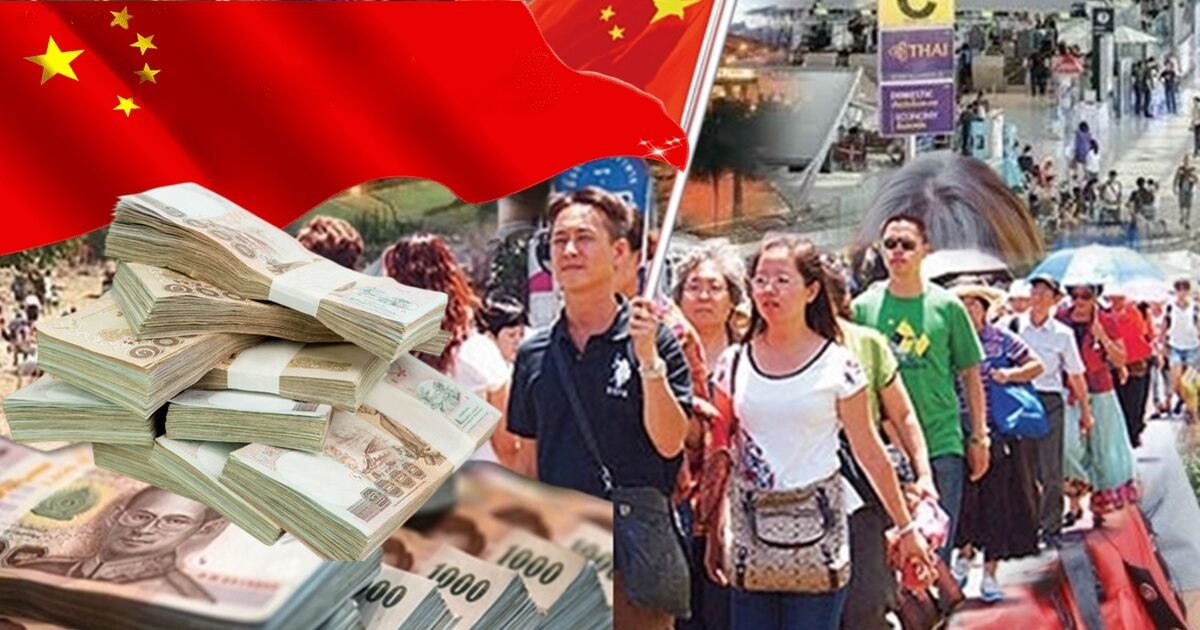
Tourism was historically the most visible channel of Chinese economic influence in Thailand.
Before the pandemic, Chinese tourists accounted for one of the largest shares of arrivals in the country, supporting airlines, hotels, restaurants, retail businesses, and entertainment sectors.
However, the post-pandemic recovery has been uneven, and the structure of engagement has begun to shift away from pure visitor flows toward more embedded economic activity.
The emerging pattern is one of capital layering.
Initial tourism exposure often precedes deeper economic engagement, where business networks formed through travel and commerce evolve into investment relationships.
Over time, this has contributed to a gradual increase in Chinese participation in Thai corporate structures and joint ventures.
A key driver of this trend is supply chain relocation.
Global companies have been diversifying manufacturing bases away from concentrated production in a single country, particularly China, due to geopolitical risk, trade policy uncertainty, and logistical vulnerabilities exposed during the pandemic.
Southeast Asia, including Thailand, has benefited from this redistribution of industrial capacity.
Chinese firms are both participants in and responses to this shift.
Many are relocating parts of their production networks into Thailand to maintain access to export markets, reduce tariff exposure, and position themselves within ASEAN-linked trade agreements.
This has created a dual dynamic in which China is both the source of outward investment and a competitor within regional manufacturing ecosystems.
The expansion of Chinese capital into Thai business structures also reflects Thailand’s own development strategy.
The country has long pursued a model based on export-led growth, industrial clustering, and foreign direct investment.
Government policy frameworks such as the Eastern Economic Corridor have been designed to attract advanced manufacturing and logistics investment, including from Chinese electric vehicle and electronics companies.
However, the deepening economic integration also raises structural questions.
One concern is the balance between foreign ownership and domestic control in key strategic sectors.
As foreign capital becomes more embedded in infrastructure and production networks, policymakers face increasing pressure to ensure that domestic firms retain competitiveness and that technology transfer occurs rather than long-term dependency.
Another issue is sector concentration.
Chinese investment is heavily concentrated in certain industries, particularly electric vehicles, renewable energy manufacturing, and export-oriented industrial production.
While this accelerates industrial upgrading, it can also create uneven development across sectors and regions.
Real estate has become another visible area of expansion.
Chinese buyers and developers have participated in residential and commercial property markets, particularly in urban centers and tourism-linked regions.
This has contributed to both capital inflows and periodic political debate over property ownership, affordability, and regulatory oversight.
Financial integration is also evolving, although more slowly.
Cross-border banking relationships, yuan-denominated trade settlement mechanisms, and regional payment linkages are gradually increasing, but capital controls and regulatory frameworks still limit full financial convergence.
Despite these complexities, the overall trajectory is clear.
China’s economic relationship with Thailand is shifting from episodic, consumption-driven engagement toward structural, embedded participation in the country’s production economy.
This reflects both China’s outward investment strategy and Thailand’s industrial policy priorities.
The result is a more tightly integrated but also more complex bilateral economic relationship, in which tourism is no longer the primary lens through which influence is measured.
Instead, the defining feature is the growing depth of Chinese participation in Thailand’s long-term economic architecture, spanning manufacturing, infrastructure, services, and supply chain networks that will shape the country’s growth path for years to come.
What is confirmed is that Chinese economic engagement in Thailand has expanded significantly in recent years, evolving from a model dominated by tourism receipts and consumer spending into one increasingly characterized by direct investment in businesses, industrial estates, logistics networks, real estate development, and export-oriented manufacturing.
This shift reflects broader structural changes in global capital allocation.
As China’s domestic economy slows relative to its high-growth decades and as geopolitical tensions influence investment destinations, Chinese firms and investors have increasingly diversified their overseas exposure across Southeast Asia, with Thailand emerging as a key hub due to its geographic location, established infrastructure, and integration into regional supply chains.
Thailand, in turn, has actively sought foreign direct investment to support industrial upgrading, technological development, and export competitiveness.
Chinese capital has become one of the most significant sources of this investment inflow.
The transformation is not limited to large state-backed infrastructure projects.
It now includes private-sector expansion in electric vehicle supply chains, solar energy manufacturing, electronics assembly, logistics platforms, warehousing, food processing, e-commerce services, and hospitality assets.
In several of these sectors, Chinese firms are not only investing but also operating integrated business ecosystems that connect production, distribution, and retail.
Tourism was historically the most visible channel of Chinese economic influence in Thailand.
Before the pandemic, Chinese tourists accounted for one of the largest shares of arrivals in the country, supporting airlines, hotels, restaurants, retail businesses, and entertainment sectors.
However, the post-pandemic recovery has been uneven, and the structure of engagement has begun to shift away from pure visitor flows toward more embedded economic activity.
The emerging pattern is one of capital layering.
Initial tourism exposure often precedes deeper economic engagement, where business networks formed through travel and commerce evolve into investment relationships.
Over time, this has contributed to a gradual increase in Chinese participation in Thai corporate structures and joint ventures.
A key driver of this trend is supply chain relocation.
Global companies have been diversifying manufacturing bases away from concentrated production in a single country, particularly China, due to geopolitical risk, trade policy uncertainty, and logistical vulnerabilities exposed during the pandemic.
Southeast Asia, including Thailand, has benefited from this redistribution of industrial capacity.
Chinese firms are both participants in and responses to this shift.
Many are relocating parts of their production networks into Thailand to maintain access to export markets, reduce tariff exposure, and position themselves within ASEAN-linked trade agreements.
This has created a dual dynamic in which China is both the source of outward investment and a competitor within regional manufacturing ecosystems.
The expansion of Chinese capital into Thai business structures also reflects Thailand’s own development strategy.
The country has long pursued a model based on export-led growth, industrial clustering, and foreign direct investment.
Government policy frameworks such as the Eastern Economic Corridor have been designed to attract advanced manufacturing and logistics investment, including from Chinese electric vehicle and electronics companies.
However, the deepening economic integration also raises structural questions.
One concern is the balance between foreign ownership and domestic control in key strategic sectors.
As foreign capital becomes more embedded in infrastructure and production networks, policymakers face increasing pressure to ensure that domestic firms retain competitiveness and that technology transfer occurs rather than long-term dependency.
Another issue is sector concentration.
Chinese investment is heavily concentrated in certain industries, particularly electric vehicles, renewable energy manufacturing, and export-oriented industrial production.
While this accelerates industrial upgrading, it can also create uneven development across sectors and regions.
Real estate has become another visible area of expansion.
Chinese buyers and developers have participated in residential and commercial property markets, particularly in urban centers and tourism-linked regions.
This has contributed to both capital inflows and periodic political debate over property ownership, affordability, and regulatory oversight.
Financial integration is also evolving, although more slowly.
Cross-border banking relationships, yuan-denominated trade settlement mechanisms, and regional payment linkages are gradually increasing, but capital controls and regulatory frameworks still limit full financial convergence.
Despite these complexities, the overall trajectory is clear.
China’s economic relationship with Thailand is shifting from episodic, consumption-driven engagement toward structural, embedded participation in the country’s production economy.
This reflects both China’s outward investment strategy and Thailand’s industrial policy priorities.
The result is a more tightly integrated but also more complex bilateral economic relationship, in which tourism is no longer the primary lens through which influence is measured.
Instead, the defining feature is the growing depth of Chinese participation in Thailand’s long-term economic architecture, spanning manufacturing, infrastructure, services, and supply chain networks that will shape the country’s growth path for years to come.
AI Disclaimer: An advanced artificial intelligence (AI) system generated the content of this page on its own. This innovative technology conducts extensive research from a variety of reliable sources, performs rigorous fact-checking and verification, cleans up and balances biased or manipulated content, and presents a minimal factual summary that is just enough yet essential for you to function as an informed and educated citizen. Please keep in mind, however, that this system is an evolving technology, and as a result, the article may contain accidental inaccuracies or errors. We urge you to help us improve our site by reporting any inaccuracies you find using the "Contact Us" link at the bottom of this page. Your helpful feedback helps us improve our system and deliver more precise content. When you find an article of interest here, please look for the full and extensive coverage of this topic in traditional news sources, as they are written by professional journalists that we try to support, not replace. We appreciate your understanding and assistance.