France’s New Restitution Law Reopens Old Imperial Wounds Over Looted Chinese Art
A sweeping French vote to streamline the return of looted cultural artefacts revives unresolved questions about colonial-era plunder, with China’s most iconic losses once again at the center of global cultural politics.
France’s cultural restitution framework has shifted in a way that directly reopens long-standing disputes over colonial-era looting, after lawmakers approved legislation designed to streamline the return of artefacts taken under imperial and wartime conditions.
The vote, which passed without opposition in the National Assembly, is being described as a structural change in how France handles objects removed from their countries of origin during periods of conquest and colonial expansion.
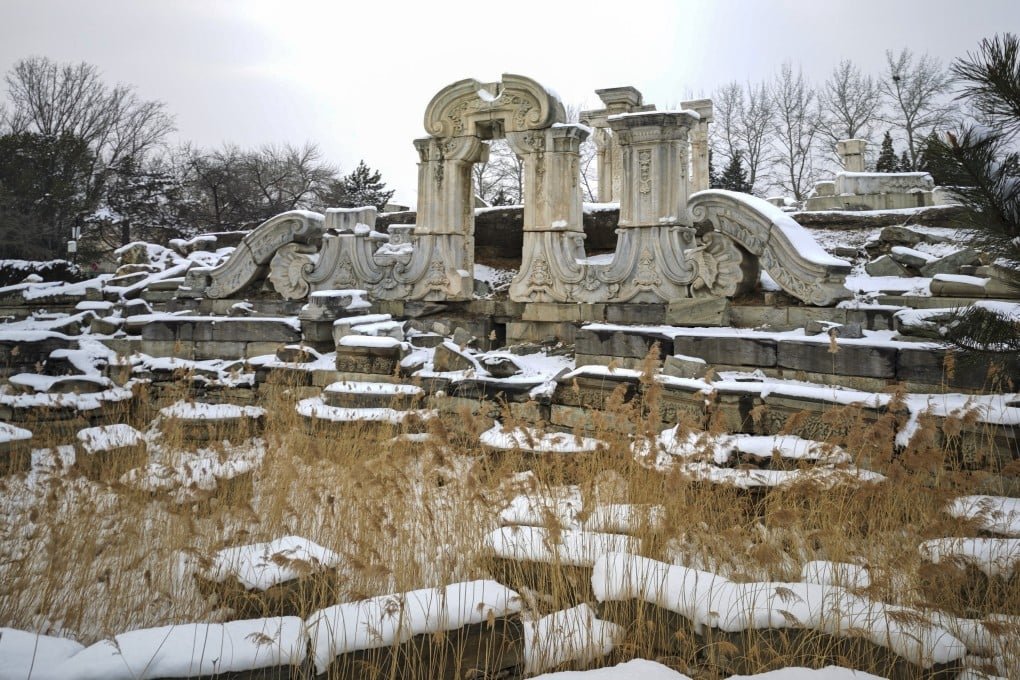
At the center of the renewed debate is the legacy of the 1860 destruction of Beijing’s Old Summer Palace, known as Yuanmingyuan, when Anglo-French forces looted and burned one of the Qing dynasty’s most important imperial sites.
The destruction remains one of the most symbolically charged episodes in China’s national memory of the so-called “Century of Humiliation,” and its surviving artefacts are scattered across museums and private collections in Europe.
The new French legislation is intended to simplify what has historically been a slow, case-by-case legal process for returning cultural property held in national collections.
Until now, restitution required specific parliamentary authorization for each object, making returns rare, politically sensitive, and legally complex.
The reform signals an attempt to move from ad hoc decisions toward a more standardized mechanism, though each return still requires legal justification under French public property rules.
The symbolic weight of the law was amplified by references to Victor Hugo, the French writer who in exile condemned the destruction of Yuanmingyuan in the nineteenth century and criticized France’s role in the looting.
His writings have long been cited in Chinese discourse on cultural loss as an early European acknowledgment of the moral dimensions of imperial plunder.
The invocation of Hugo during the legislative process underscored how historical memory continues to shape present-day policy choices.
For China, the issue is not merely cultural but deeply tied to national identity and historical sovereignty.
Objects taken from Yuanmingyuan and other imperial sites are viewed not as isolated artefacts but as fragments of a systematically dismantled cultural heritage.
Efforts by Chinese institutions and diplomats to recover such items have intensified over recent decades, often focusing on high-profile auctions and museum holdings in Europe and North America.
The French reform arrives amid broader international pressure on museums and governments to reassess collections acquired during colonial expansion.
Institutions across Europe have begun returning artefacts to African and Asian countries, though progress remains uneven and often dependent on bilateral agreements rather than binding international norms.
France has positioned itself as one of the more active European states in addressing restitution claims, but the scale of historical holdings means disputes are likely to persist for decades.
Analysts note that the key tension lies between legal ownership under current national laws and moral claims rooted in historical injustice.
Museums argue that collections are part of global heritage accessible to international audiences, while claimant states argue that possession itself is the result of coercive historical conditions that cannot be separated from legitimacy.
In practical terms, the new French law accelerates the administrative pathway for returning artefacts but does not automatically determine which objects will be repatriated.
Each case will still require political and legal validation, meaning that high-value or symbolically significant objects—particularly those linked to imperial plunder in China—are likely to remain contested.
What is now clear is that restitution has moved from symbolic gesture to structural policy.
The approval of a streamlined mechanism means future claims will be processed more predictably, and pressure will increase on major European institutions holding artefacts from colonial contexts.
The balance between preservation of universal museum collections and recognition of historical dispossession has entered a more formal and accelerated phase, with legal infrastructure now catching up to decades of political and cultural dispute.
The vote, which passed without opposition in the National Assembly, is being described as a structural change in how France handles objects removed from their countries of origin during periods of conquest and colonial expansion.
At the center of the renewed debate is the legacy of the 1860 destruction of Beijing’s Old Summer Palace, known as Yuanmingyuan, when Anglo-French forces looted and burned one of the Qing dynasty’s most important imperial sites.
The destruction remains one of the most symbolically charged episodes in China’s national memory of the so-called “Century of Humiliation,” and its surviving artefacts are scattered across museums and private collections in Europe.
The new French legislation is intended to simplify what has historically been a slow, case-by-case legal process for returning cultural property held in national collections.
Until now, restitution required specific parliamentary authorization for each object, making returns rare, politically sensitive, and legally complex.
The reform signals an attempt to move from ad hoc decisions toward a more standardized mechanism, though each return still requires legal justification under French public property rules.
The symbolic weight of the law was amplified by references to Victor Hugo, the French writer who in exile condemned the destruction of Yuanmingyuan in the nineteenth century and criticized France’s role in the looting.
His writings have long been cited in Chinese discourse on cultural loss as an early European acknowledgment of the moral dimensions of imperial plunder.
The invocation of Hugo during the legislative process underscored how historical memory continues to shape present-day policy choices.
For China, the issue is not merely cultural but deeply tied to national identity and historical sovereignty.
Objects taken from Yuanmingyuan and other imperial sites are viewed not as isolated artefacts but as fragments of a systematically dismantled cultural heritage.
Efforts by Chinese institutions and diplomats to recover such items have intensified over recent decades, often focusing on high-profile auctions and museum holdings in Europe and North America.
The French reform arrives amid broader international pressure on museums and governments to reassess collections acquired during colonial expansion.
Institutions across Europe have begun returning artefacts to African and Asian countries, though progress remains uneven and often dependent on bilateral agreements rather than binding international norms.
France has positioned itself as one of the more active European states in addressing restitution claims, but the scale of historical holdings means disputes are likely to persist for decades.
Analysts note that the key tension lies between legal ownership under current national laws and moral claims rooted in historical injustice.
Museums argue that collections are part of global heritage accessible to international audiences, while claimant states argue that possession itself is the result of coercive historical conditions that cannot be separated from legitimacy.
In practical terms, the new French law accelerates the administrative pathway for returning artefacts but does not automatically determine which objects will be repatriated.
Each case will still require political and legal validation, meaning that high-value or symbolically significant objects—particularly those linked to imperial plunder in China—are likely to remain contested.
What is now clear is that restitution has moved from symbolic gesture to structural policy.
The approval of a streamlined mechanism means future claims will be processed more predictably, and pressure will increase on major European institutions holding artefacts from colonial contexts.
The balance between preservation of universal museum collections and recognition of historical dispossession has entered a more formal and accelerated phase, with legal infrastructure now catching up to decades of political and cultural dispute.
AI Disclaimer: An advanced artificial intelligence (AI) system generated the content of this page on its own. This innovative technology conducts extensive research from a variety of reliable sources, performs rigorous fact-checking and verification, cleans up and balances biased or manipulated content, and presents a minimal factual summary that is just enough yet essential for you to function as an informed and educated citizen. Please keep in mind, however, that this system is an evolving technology, and as a result, the article may contain accidental inaccuracies or errors. We urge you to help us improve our site by reporting any inaccuracies you find using the "Contact Us" link at the bottom of this page. Your helpful feedback helps us improve our system and deliver more precise content. When you find an article of interest here, please look for the full and extensive coverage of this topic in traditional news sources, as they are written by professional journalists that we try to support, not replace. We appreciate your understanding and assistance.