Hong Kong Moves Toward First Heavy-Cargo Flying Car Trials as City Pushes Into Low-Altitude Aviation
Authorities and private firms aim to launch electric aircraft cargo flights within six months, testing whether Hong Kong can build a regulated urban air mobility industry around logistics, infrastructure and tourism.
Hong Kong’s government is using a new regulatory framework to accelerate development of a so-called low-altitude economy, and the first major test could arrive within six months with trial flights of heavy-cargo electric aircraft designed to transport construction materials into remote parts of the territory.
What is confirmed is that infrastructure consultancy AECOM, working with mainland Chinese manufacturer AutoFlight and Chun Wo Construction and Engineering, has been selected for one of the first pilot projects under Hong Kong’s “Regulatory Sandbox X” programme.
The initiative was created by the Transport and Logistics Bureau and the Civil Aviation Department to test advanced low-altitude aircraft operations under controlled regulatory conditions.
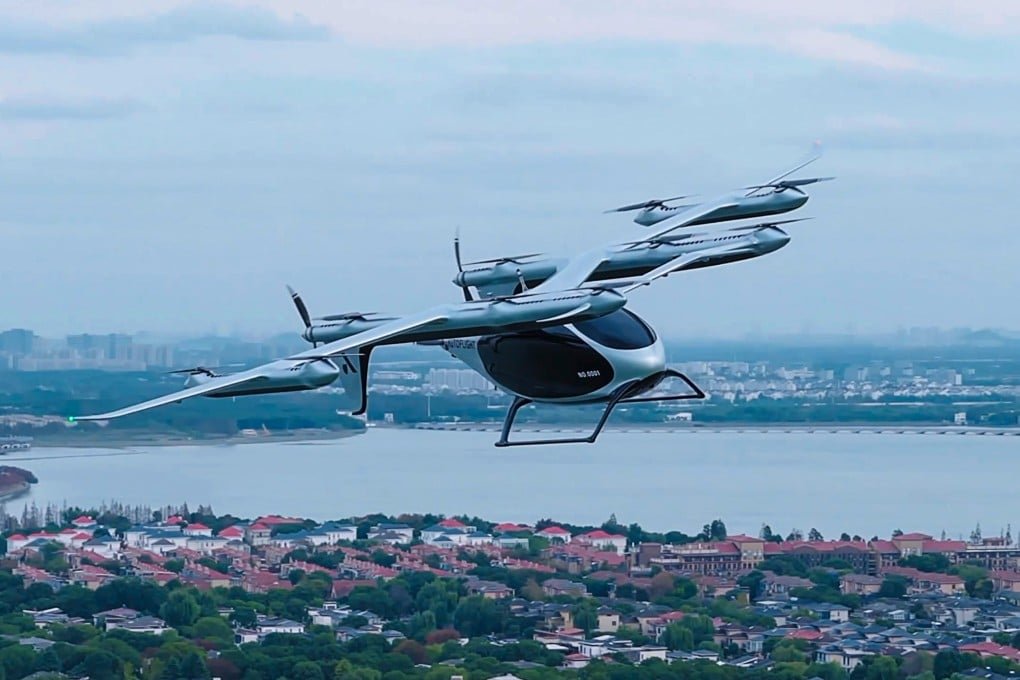
The proposed trials involve electric vertical take-off and landing aircraft, commonly known as eVTOLs.
These aircraft use electric propulsion systems and are designed to operate without traditional runways, combining characteristics of helicopters, drones and fixed-wing aircraft.
The Hong Kong project focuses initially on cargo transport rather than passenger services.
AECOM executives said the first operational target is moving heavy construction materials to isolated sites in the New Territories.
The aircraft under discussion reportedly has a payload capacity of roughly two tonnes, placing it far beyond the scale of ordinary consumer or commercial drones currently permitted in Hong Kong.
The timing matters because Hong Kong is trying to avoid falling behind mainland Chinese cities and regional competitors that have moved aggressively into advanced air mobility systems.
Shenzhen, Guangzhou and several other mainland cities have already expanded drone logistics, autonomous aviation trials and pilot passenger eVTOL services.
China’s central government has elevated the “low-altitude economy” into a national industrial priority tied to advanced manufacturing, artificial intelligence, battery technology and urban logistics.
Hong Kong’s approach is more cautious because the city operates under a far denser aviation environment and a stricter common-law regulatory structure.
The territory contains one of the world’s busiest international airports, highly compressed urban airspace, extensive restricted zones and dense residential districts that complicate autonomous or semi-autonomous aircraft deployment.
That is why regulators are beginning with cargo flights in remote areas rather than urban passenger routes.
Construction logistics provide a controlled commercial use case with measurable economic value and lower public safety exposure.
Remote infrastructure projects often require expensive ground transport or helicopter support.
Electric aircraft could reduce delivery times, lower fuel costs and cut emissions if the systems prove reliable.
The sandbox model itself is central to the story.
Rather than fully legalising advanced air mobility immediately, Hong Kong is using limited pilot zones and temporary approvals to gather operational data before broader commercial rollout.
Officials have already confirmed that more than one hundred applications were submitted under the expanded Sandbox X programme, covering logistics, inspections, surveillance, emergency response and passenger transport.
The government has also begun parallel work on unmanned traffic management systems, cross-border drone routes and shared operational platforms.
Financial Secretary Paul Chan previously described the low-altitude economy as a future growth engine tied to smart-city development and integration with mainland China’s Greater Bay Area.
The technology remains commercially and regulatorily immature worldwide.
Only a small number of eVTOL aircraft have obtained formal certification from aviation authorities globally.
AutoFlight’s cargo-capable systems have received important approvals in mainland China, but broader international certification remains ongoing.
Large-scale commercial passenger deployment is still limited by battery endurance, air traffic integration, weather sensitivity, insurance requirements and safety certification complexity.
Hong Kong’s aviation authorities therefore face a difficult balancing exercise.
They must encourage innovation without undermining one of the world’s most safety-sensitive airspaces.
Even small drone operations in the city remain heavily regulated, with extensive no-fly zones surrounding airports, military facilities, ports and dense urban corridors.
The long-term ambitions extend beyond cargo.
AECOM executives have publicly identified ecotourism and aerial sightseeing as potential future applications if cargo operations succeed.
Victoria Harbour sightseeing flights using electric aircraft would represent a major symbolic shift for Hong Kong’s transport sector and tourism industry.
But passenger operations would require far stricter oversight than cargo transport.
Regulators would need to establish standards for pilot certification, autonomous systems, vertiport infrastructure, emergency landing procedures, cybersecurity, liability insurance and noise management.
Public acceptance would also become a major factor in one of the world’s most vertically dense cities.
The economic implications are broader than aviation alone.
Hong Kong is attempting to position itself as a regional testing and financing hub for advanced mobility technologies at a time when mainland China is rapidly scaling industrial leadership in batteries, drones and electric transportation systems.
Officials are also exploring how aerospace and low-altitude technology firms could use Hong Kong’s capital markets and international legal structure to support expansion.
The project also reflects the growing strategic importance of logistics resilience.
Governments and companies across Asia are investing heavily in automation, autonomous transport and alternative delivery systems as labour costs rise and infrastructure bottlenecks intensify.
Cargo eVTOL systems are increasingly viewed not as novelty vehicles but as potential industrial tools for construction, emergency response and high-value freight transport.
The next six months will determine whether Hong Kong can move from policy announcements to real-world aviation deployment.
Regulators, engineers and logistics operators are now preparing for what would become the city’s first heavy-cargo eVTOL demonstration flight under a formal government-backed testing framework.
What is confirmed is that infrastructure consultancy AECOM, working with mainland Chinese manufacturer AutoFlight and Chun Wo Construction and Engineering, has been selected for one of the first pilot projects under Hong Kong’s “Regulatory Sandbox X” programme.
The initiative was created by the Transport and Logistics Bureau and the Civil Aviation Department to test advanced low-altitude aircraft operations under controlled regulatory conditions.
The proposed trials involve electric vertical take-off and landing aircraft, commonly known as eVTOLs.
These aircraft use electric propulsion systems and are designed to operate without traditional runways, combining characteristics of helicopters, drones and fixed-wing aircraft.
The Hong Kong project focuses initially on cargo transport rather than passenger services.
AECOM executives said the first operational target is moving heavy construction materials to isolated sites in the New Territories.
The aircraft under discussion reportedly has a payload capacity of roughly two tonnes, placing it far beyond the scale of ordinary consumer or commercial drones currently permitted in Hong Kong.
The timing matters because Hong Kong is trying to avoid falling behind mainland Chinese cities and regional competitors that have moved aggressively into advanced air mobility systems.
Shenzhen, Guangzhou and several other mainland cities have already expanded drone logistics, autonomous aviation trials and pilot passenger eVTOL services.
China’s central government has elevated the “low-altitude economy” into a national industrial priority tied to advanced manufacturing, artificial intelligence, battery technology and urban logistics.
Hong Kong’s approach is more cautious because the city operates under a far denser aviation environment and a stricter common-law regulatory structure.
The territory contains one of the world’s busiest international airports, highly compressed urban airspace, extensive restricted zones and dense residential districts that complicate autonomous or semi-autonomous aircraft deployment.
That is why regulators are beginning with cargo flights in remote areas rather than urban passenger routes.
Construction logistics provide a controlled commercial use case with measurable economic value and lower public safety exposure.
Remote infrastructure projects often require expensive ground transport or helicopter support.
Electric aircraft could reduce delivery times, lower fuel costs and cut emissions if the systems prove reliable.
The sandbox model itself is central to the story.
Rather than fully legalising advanced air mobility immediately, Hong Kong is using limited pilot zones and temporary approvals to gather operational data before broader commercial rollout.
Officials have already confirmed that more than one hundred applications were submitted under the expanded Sandbox X programme, covering logistics, inspections, surveillance, emergency response and passenger transport.
The government has also begun parallel work on unmanned traffic management systems, cross-border drone routes and shared operational platforms.
Financial Secretary Paul Chan previously described the low-altitude economy as a future growth engine tied to smart-city development and integration with mainland China’s Greater Bay Area.
The technology remains commercially and regulatorily immature worldwide.
Only a small number of eVTOL aircraft have obtained formal certification from aviation authorities globally.
AutoFlight’s cargo-capable systems have received important approvals in mainland China, but broader international certification remains ongoing.
Large-scale commercial passenger deployment is still limited by battery endurance, air traffic integration, weather sensitivity, insurance requirements and safety certification complexity.
Hong Kong’s aviation authorities therefore face a difficult balancing exercise.
They must encourage innovation without undermining one of the world’s most safety-sensitive airspaces.
Even small drone operations in the city remain heavily regulated, with extensive no-fly zones surrounding airports, military facilities, ports and dense urban corridors.
The long-term ambitions extend beyond cargo.
AECOM executives have publicly identified ecotourism and aerial sightseeing as potential future applications if cargo operations succeed.
Victoria Harbour sightseeing flights using electric aircraft would represent a major symbolic shift for Hong Kong’s transport sector and tourism industry.
But passenger operations would require far stricter oversight than cargo transport.
Regulators would need to establish standards for pilot certification, autonomous systems, vertiport infrastructure, emergency landing procedures, cybersecurity, liability insurance and noise management.
Public acceptance would also become a major factor in one of the world’s most vertically dense cities.
The economic implications are broader than aviation alone.
Hong Kong is attempting to position itself as a regional testing and financing hub for advanced mobility technologies at a time when mainland China is rapidly scaling industrial leadership in batteries, drones and electric transportation systems.
Officials are also exploring how aerospace and low-altitude technology firms could use Hong Kong’s capital markets and international legal structure to support expansion.
The project also reflects the growing strategic importance of logistics resilience.
Governments and companies across Asia are investing heavily in automation, autonomous transport and alternative delivery systems as labour costs rise and infrastructure bottlenecks intensify.
Cargo eVTOL systems are increasingly viewed not as novelty vehicles but as potential industrial tools for construction, emergency response and high-value freight transport.
The next six months will determine whether Hong Kong can move from policy announcements to real-world aviation deployment.
Regulators, engineers and logistics operators are now preparing for what would become the city’s first heavy-cargo eVTOL demonstration flight under a formal government-backed testing framework.
AI Disclaimer: An advanced artificial intelligence (AI) system generated the content of this page on its own. This innovative technology conducts extensive research from a variety of reliable sources, performs rigorous fact-checking and verification, cleans up and balances biased or manipulated content, and presents a minimal factual summary that is just enough yet essential for you to function as an informed and educated citizen. Please keep in mind, however, that this system is an evolving technology, and as a result, the article may contain accidental inaccuracies or errors. We urge you to help us improve our site by reporting any inaccuracies you find using the "Contact Us" link at the bottom of this page. Your helpful feedback helps us improve our system and deliver more precise content. When you find an article of interest here, please look for the full and extensive coverage of this topic in traditional news sources, as they are written by professional journalists that we try to support, not replace. We appreciate your understanding and assistance.