Hong Kong’s National Security Law Redefines Press Freedom Through Arrests, Closures, and Legal Risk
A timeline of enforcement shows how a sweeping security framework has transformed media operations, accountability, and public information flow in the city
SYSTEM-DRIVEN — Hong Kong’s national security law, imposed in 2020, has become the central force reshaping the city’s press environment by introducing broad legal powers that directly affect how journalists operate, what can be published, and which media organizations can survive.
What is confirmed is that since the law took effect in June 2020, authorities have used its provisions to target individuals and institutions involved in media production.
The law criminalizes acts defined as secession, subversion, terrorism, and collusion with foreign forces, with penalties that can include life imprisonment.
Its definitions are widely regarded as expansive, allowing enforcement to reach journalistic activity if it is interpreted as threatening national security.
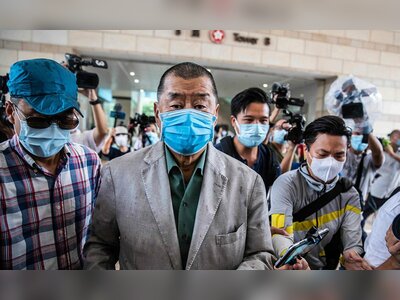
The most consequential early shift came with arrests of high-profile media figures and executives.
Senior newsroom leaders and publishers were detained on allegations tied to collusion or seditious publication.
These actions were accompanied by police searches of newsrooms, seizure of journalistic materials, and freezing of corporate assets, which directly impaired operations.
The mechanism is financial as much as legal.
Freezing assets has proven decisive in forcing media closures.
Several prominent independent outlets shut down after authorities restricted access to funds needed to pay staff and continue publishing.
These closures were not isolated incidents but part of a pattern in which legal pressure and financial constraints intersected to dismantle critical news organizations.
Another confirmed development is the revival and use of colonial-era sedition laws alongside the national security framework.
Authorities have charged journalists and editors with publishing material deemed seditious, broadening the legal exposure beyond the national security law itself.
This dual-track enforcement increases uncertainty for media professionals by expanding the range of potential offenses.
The impact extends beyond arrests and closures into structural changes within newsrooms.
Many outlets have reduced investigative reporting, altered editorial lines, or introduced internal compliance reviews to avoid legal risk.
Self-censorship has become a documented response, driven not by formal directives but by the perceived boundaries of enforcement.
Foreign media organizations have also adjusted their presence.
Some have relocated regional staff or reassessed operations in Hong Kong due to concerns over legal exposure and data security.
This shift has weakened the city’s long-standing role as a regional media hub connecting China to international audiences.
Authorities maintain that the law has restored stability after the unrest of 2019 and insist that press freedom remains protected as long as reporting does not violate national security provisions.
This position reflects a narrower definition of permissible journalism, where the boundary between reporting and security risk is determined by enforcement authorities.
Critics argue that the framework has fundamentally altered the operating environment for journalism by introducing legal ambiguity and high penalties that discourage scrutiny of government actions.
The key issue is not only the number of prosecutions but the deterrent effect created by the law’s breadth and enforcement methods.
The consequences are measurable in institutional terms.
Media diversity has contracted, ownership structures have shifted, and the range of publicly available viewpoints has narrowed.
Professional associations have disbanded, and journalist unions have dissolved under pressure, further reducing collective capacity to resist or negotiate regulatory constraints.
What changes next is driven by continued enforcement and legal precedent.
Each prosecution clarifies how authorities interpret the law, incrementally defining the limits of permissible reporting.
The cumulative effect is a restructured media system in which legal compliance, rather than editorial independence, has become the dominant organizing principle.
What is confirmed is that since the law took effect in June 2020, authorities have used its provisions to target individuals and institutions involved in media production.
The law criminalizes acts defined as secession, subversion, terrorism, and collusion with foreign forces, with penalties that can include life imprisonment.
Its definitions are widely regarded as expansive, allowing enforcement to reach journalistic activity if it is interpreted as threatening national security.
The most consequential early shift came with arrests of high-profile media figures and executives.
Senior newsroom leaders and publishers were detained on allegations tied to collusion or seditious publication.
These actions were accompanied by police searches of newsrooms, seizure of journalistic materials, and freezing of corporate assets, which directly impaired operations.
The mechanism is financial as much as legal.
Freezing assets has proven decisive in forcing media closures.
Several prominent independent outlets shut down after authorities restricted access to funds needed to pay staff and continue publishing.
These closures were not isolated incidents but part of a pattern in which legal pressure and financial constraints intersected to dismantle critical news organizations.
Another confirmed development is the revival and use of colonial-era sedition laws alongside the national security framework.
Authorities have charged journalists and editors with publishing material deemed seditious, broadening the legal exposure beyond the national security law itself.
This dual-track enforcement increases uncertainty for media professionals by expanding the range of potential offenses.
The impact extends beyond arrests and closures into structural changes within newsrooms.
Many outlets have reduced investigative reporting, altered editorial lines, or introduced internal compliance reviews to avoid legal risk.
Self-censorship has become a documented response, driven not by formal directives but by the perceived boundaries of enforcement.
Foreign media organizations have also adjusted their presence.
Some have relocated regional staff or reassessed operations in Hong Kong due to concerns over legal exposure and data security.
This shift has weakened the city’s long-standing role as a regional media hub connecting China to international audiences.
Authorities maintain that the law has restored stability after the unrest of 2019 and insist that press freedom remains protected as long as reporting does not violate national security provisions.
This position reflects a narrower definition of permissible journalism, where the boundary between reporting and security risk is determined by enforcement authorities.
Critics argue that the framework has fundamentally altered the operating environment for journalism by introducing legal ambiguity and high penalties that discourage scrutiny of government actions.
The key issue is not only the number of prosecutions but the deterrent effect created by the law’s breadth and enforcement methods.
The consequences are measurable in institutional terms.
Media diversity has contracted, ownership structures have shifted, and the range of publicly available viewpoints has narrowed.
Professional associations have disbanded, and journalist unions have dissolved under pressure, further reducing collective capacity to resist or negotiate regulatory constraints.
What changes next is driven by continued enforcement and legal precedent.
Each prosecution clarifies how authorities interpret the law, incrementally defining the limits of permissible reporting.
The cumulative effect is a restructured media system in which legal compliance, rather than editorial independence, has become the dominant organizing principle.
AI Disclaimer: An advanced artificial intelligence (AI) system generated the content of this page on its own. This innovative technology conducts extensive research from a variety of reliable sources, performs rigorous fact-checking and verification, cleans up and balances biased or manipulated content, and presents a minimal factual summary that is just enough yet essential for you to function as an informed and educated citizen. Please keep in mind, however, that this system is an evolving technology, and as a result, the article may contain accidental inaccuracies or errors. We urge you to help us improve our site by reporting any inaccuracies you find using the "Contact Us" link at the bottom of this page. Your helpful feedback helps us improve our system and deliver more precise content. When you find an article of interest here, please look for the full and extensive coverage of this topic in traditional news sources, as they are written by professional journalists that we try to support, not replace. We appreciate your understanding and assistance.