Millennium-Linked Hedge Fund Retreats From Hong Kong Office Space as Finance Market Splits in Two
The move highlights a widening divide inside Hong Kong’s commercial property market, where elite trading firms are expanding selectively while weaker or underperforming funds cut costs and shrink operations.
Hong Kong’s office market remains fundamentally driven by the structure of the city’s financial industry, and the latest sign came when a hedge fund previously backed by Millennium Management gave up office space in the city.
The decision is not an isolated real-estate adjustment.
It reflects a deeper reshaping of the Asian hedge fund business after years of higher financing costs, uneven trading performance, weaker China-related deal flow, and intense competition for talent.
What is confirmed is that several hedge funds connected to Millennium’s broader ecosystem — including former spinouts, seeded firms, and ex-Millennium executives running independent platforms — have been reassessing their footprint across Asia.
Some firms are expanding aggressively into premium office towers in Hong Kong’s Central district, while others are downsizing, closing offices, returning capital, or consolidating teams.
The key issue is not simply whether Hong Kong is recovering.
It is which kinds of firms can still justify operating at scale inside one of the world’s most expensive financial districts.
Over the past two years, the city’s commercial office market has experienced a sharp bifurcation.
Prime buildings in Central have recently shown signs of stabilization after a prolonged downturn.
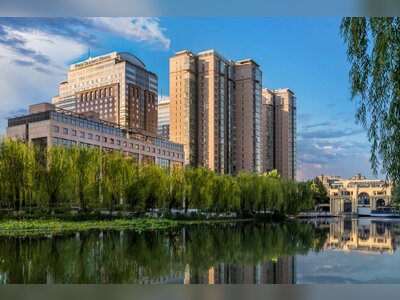
Hedge funds, proprietary trading firms, market makers, and large financial institutions have begun leasing premium space again, taking advantage of rents that remain far below pre-pandemic peaks.
Several large multi-strategy firms have expanded in landmark towers, betting that Hong Kong remains indispensable for China access, Asian capital markets, and regional talent recruitment.
At the same time, the broader office market remains under pressure.
Vacancy rates across many districts are still elevated after years of weak demand, geopolitical uncertainty, pandemic disruption, and a slower-than-expected recovery in mainland Chinese activity.
Office valuations and rents have fallen dramatically from their highs, forcing landlords to offer incentives and pushing weaker tenants into retrenchment.
For hedge funds, the economics have become harsher.
The multi-manager model popularized by firms such as Millennium, Citadel, and Point72 depends on expensive infrastructure, heavy technology spending, rapid hiring, and high compensation guarantees for portfolio managers.
That model worked exceptionally well during years of abundant liquidity and strong trading volatility.
But the industry has become increasingly crowded.
Funds are now competing for the same traders, researchers, quantitative analysts, and execution specialists.
Compensation inflation across Asia has intensified, especially in Hong Kong and Singapore.
Some hedge funds have struggled to justify the cost base required to maintain a major regional presence.
Several firms tied to Millennium’s orbit have already faced pressure.
Some seeded platforms failed to scale quickly enough.
Others underperformed or lost capital backing.
One Hong Kong-based hedge fund backed by Millennium saw support withdrawn less than a year after launch.
Another prominent former Millennium executive shifted strategy after struggling to build an independent global rival.
The industry’s rapid expansion phase has increasingly collided with the realities of investor expectations, rising operating costs, and tighter risk management.
The office market itself has become a visible indicator of those pressures.
Expanding firms are moving into newer, higher-grade towers and often consolidating staff into flagship locations.
Retrenching firms are reducing floor space, abandoning secondary offices, or shifting personnel toward Singapore, Dubai, London, or New York.
Hong Kong nevertheless retains important structural advantages.
The city still offers deep capital markets infrastructure, low taxes, unrestricted capital movement, sophisticated legal frameworks, and proximity to mainland China.
Trading firms continue to value the concentration of brokers, banks, exchanges, and institutional investors located within the territory.
There are also signs that financial activity has improved from the lows seen after the pandemic-era contraction.
Equity issuance, trading activity, and some parts of the capital markets business have strengthened.
Financial firms and hedge funds have recently accounted for a meaningful share of new premium-office demand in Central.
But the recovery remains highly selective.
The strongest firms are using the downturn to upgrade offices and attract talent.
Smaller or less profitable managers are shrinking.
That divergence is reshaping the city’s financial geography.
The broader implication extends beyond real estate.
Hong Kong is moving away from the era when almost any ambitious hedge fund could justify a large standalone presence in the city.
The market is increasingly rewarding scale, stable financing, institutional infrastructure, and sustained trading performance.
In practical terms, the firms expanding today tend to be the largest global platforms with diversified strategies, stronger balance sheets, and the ability to absorb volatility.
Firms retreating from office commitments are often those caught between rising operational costs and a tougher fundraising environment.
That makes the surrender of office space by a Millennium-linked hedge fund significant beyond its immediate size.
It signals that Asia’s hedge fund industry is entering a more disciplined phase after years of aggressive growth, and Hong Kong’s office market is becoming a direct reflection of which firms still have the capital, confidence, and performance to compete at the top end of global finance.
The decision is not an isolated real-estate adjustment.
It reflects a deeper reshaping of the Asian hedge fund business after years of higher financing costs, uneven trading performance, weaker China-related deal flow, and intense competition for talent.
What is confirmed is that several hedge funds connected to Millennium’s broader ecosystem — including former spinouts, seeded firms, and ex-Millennium executives running independent platforms — have been reassessing their footprint across Asia.
Some firms are expanding aggressively into premium office towers in Hong Kong’s Central district, while others are downsizing, closing offices, returning capital, or consolidating teams.
The key issue is not simply whether Hong Kong is recovering.
It is which kinds of firms can still justify operating at scale inside one of the world’s most expensive financial districts.
Over the past two years, the city’s commercial office market has experienced a sharp bifurcation.
Prime buildings in Central have recently shown signs of stabilization after a prolonged downturn.
Hedge funds, proprietary trading firms, market makers, and large financial institutions have begun leasing premium space again, taking advantage of rents that remain far below pre-pandemic peaks.
Several large multi-strategy firms have expanded in landmark towers, betting that Hong Kong remains indispensable for China access, Asian capital markets, and regional talent recruitment.
At the same time, the broader office market remains under pressure.
Vacancy rates across many districts are still elevated after years of weak demand, geopolitical uncertainty, pandemic disruption, and a slower-than-expected recovery in mainland Chinese activity.
Office valuations and rents have fallen dramatically from their highs, forcing landlords to offer incentives and pushing weaker tenants into retrenchment.
For hedge funds, the economics have become harsher.
The multi-manager model popularized by firms such as Millennium, Citadel, and Point72 depends on expensive infrastructure, heavy technology spending, rapid hiring, and high compensation guarantees for portfolio managers.
That model worked exceptionally well during years of abundant liquidity and strong trading volatility.
But the industry has become increasingly crowded.
Funds are now competing for the same traders, researchers, quantitative analysts, and execution specialists.
Compensation inflation across Asia has intensified, especially in Hong Kong and Singapore.
Some hedge funds have struggled to justify the cost base required to maintain a major regional presence.
Several firms tied to Millennium’s orbit have already faced pressure.
Some seeded platforms failed to scale quickly enough.
Others underperformed or lost capital backing.
One Hong Kong-based hedge fund backed by Millennium saw support withdrawn less than a year after launch.
Another prominent former Millennium executive shifted strategy after struggling to build an independent global rival.
The industry’s rapid expansion phase has increasingly collided with the realities of investor expectations, rising operating costs, and tighter risk management.
The office market itself has become a visible indicator of those pressures.
Expanding firms are moving into newer, higher-grade towers and often consolidating staff into flagship locations.
Retrenching firms are reducing floor space, abandoning secondary offices, or shifting personnel toward Singapore, Dubai, London, or New York.
Hong Kong nevertheless retains important structural advantages.
The city still offers deep capital markets infrastructure, low taxes, unrestricted capital movement, sophisticated legal frameworks, and proximity to mainland China.
Trading firms continue to value the concentration of brokers, banks, exchanges, and institutional investors located within the territory.
There are also signs that financial activity has improved from the lows seen after the pandemic-era contraction.
Equity issuance, trading activity, and some parts of the capital markets business have strengthened.
Financial firms and hedge funds have recently accounted for a meaningful share of new premium-office demand in Central.
But the recovery remains highly selective.
The strongest firms are using the downturn to upgrade offices and attract talent.
Smaller or less profitable managers are shrinking.
That divergence is reshaping the city’s financial geography.
The broader implication extends beyond real estate.
Hong Kong is moving away from the era when almost any ambitious hedge fund could justify a large standalone presence in the city.
The market is increasingly rewarding scale, stable financing, institutional infrastructure, and sustained trading performance.
In practical terms, the firms expanding today tend to be the largest global platforms with diversified strategies, stronger balance sheets, and the ability to absorb volatility.
Firms retreating from office commitments are often those caught between rising operational costs and a tougher fundraising environment.
That makes the surrender of office space by a Millennium-linked hedge fund significant beyond its immediate size.
It signals that Asia’s hedge fund industry is entering a more disciplined phase after years of aggressive growth, and Hong Kong’s office market is becoming a direct reflection of which firms still have the capital, confidence, and performance to compete at the top end of global finance.
AI Disclaimer: An advanced artificial intelligence (AI) system generated the content of this page on its own. This innovative technology conducts extensive research from a variety of reliable sources, performs rigorous fact-checking and verification, cleans up and balances biased or manipulated content, and presents a minimal factual summary that is just enough yet essential for you to function as an informed and educated citizen. Please keep in mind, however, that this system is an evolving technology, and as a result, the article may contain accidental inaccuracies or errors. We urge you to help us improve our site by reporting any inaccuracies you find using the "Contact Us" link at the bottom of this page. Your helpful feedback helps us improve our system and deliver more precise content. When you find an article of interest here, please look for the full and extensive coverage of this topic in traditional news sources, as they are written by professional journalists that we try to support, not replace. We appreciate your understanding and assistance.