Quad Nations Move to Break China’s Grip on Critical Minerals Supply Chains
The United States, Japan, India and Australia are accelerating plans for coordinated mineral security as Beijing’s dominance over rare earth processing reshapes global trade and industrial strategy.
The story is fundamentally system-driven.
The central issue is not a single diplomatic meeting or trade dispute, but the emergence of a new industrial and geopolitical framework built around control of critical minerals — the raw materials essential for batteries, semiconductors, weapons systems, electric vehicles and advanced manufacturing.
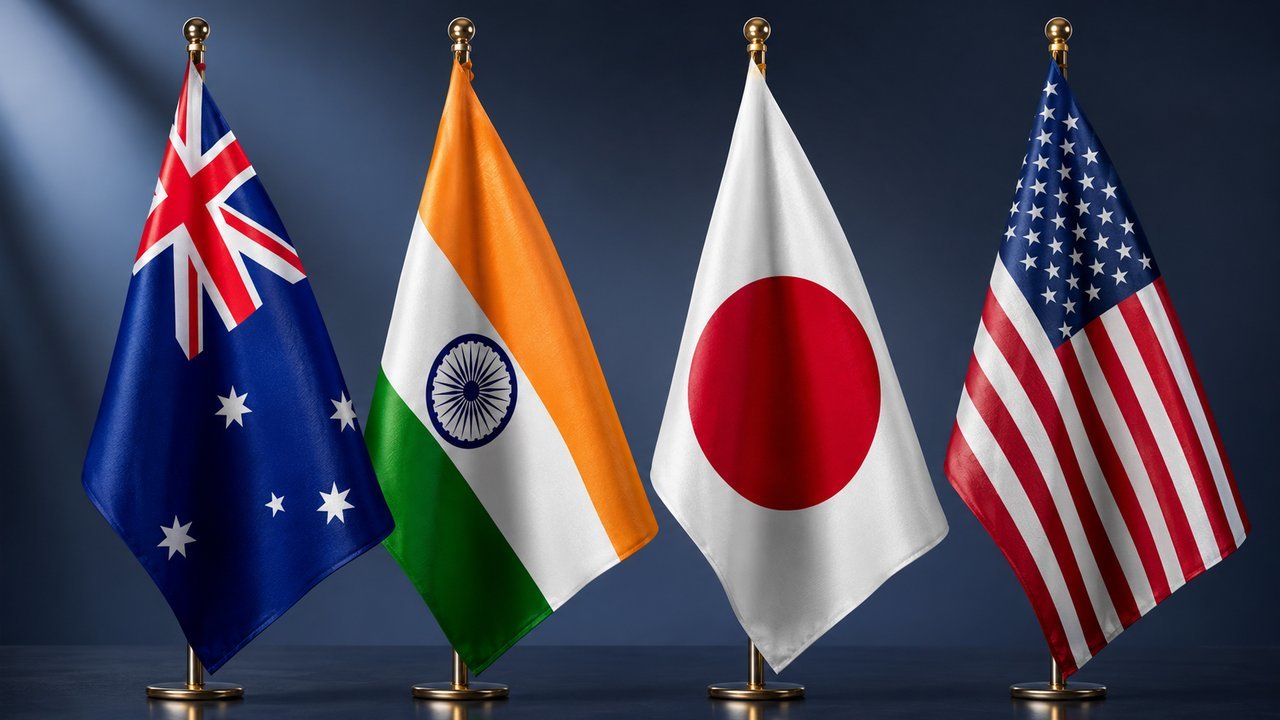
The United States, Japan, India and Australia are now deepening discussions on coordinated strategies to reduce dependence on China for critical minerals processing and supply.
What is confirmed is that the four countries, working through the Quad security framework and parallel bilateral agreements, have expanded cooperation on mineral sourcing, refining, stockpiling and supply-chain resilience.
The push reflects a broad recognition inside Western and Indo-Pacific governments that China occupies an overwhelmingly dominant position in the global processing and refining system for many critical minerals, including rare earths, lithium, cobalt and graphite.
In several categories, China controls the majority of global refining capacity even when the raw materials themselves are mined elsewhere.
That imbalance has transformed minerals policy into a national security issue.
The concern intensified after Beijing imposed export restrictions and licensing controls on several strategic materials over the past two years amid worsening trade tensions with Washington and its allies.
Governments increasingly fear that dependence on Chinese refining capacity creates a structural vulnerability that could disrupt defense manufacturing, energy infrastructure and advanced technology production during a geopolitical crisis.
The Quad countries are responding by attempting to build an alternative ecosystem.
Recent ministerial meetings and strategic frameworks have focused on creating secure supply chains spanning mining, refining, transportation and manufacturing.
Australia is central to that effort because it possesses some of the world’s largest reserves of lithium and rare earth elements.
India offers a large industrial market and processing ambitions.
Japan contributes advanced manufacturing and financing capabilities.
The United States provides capital, defense demand and geopolitical coordination.
The objective is not merely to mine more minerals outside China.
The key challenge is processing.
China spent decades building refining infrastructure supported by state-backed financing, industrial subsidies, lower environmental compliance costs and long-term strategic planning.
Even when minerals are extracted in Australia or Africa, they are often shipped to China for refining before returning to global markets as battery materials, magnets or industrial components.
That means alternative supply chains cannot be built simply by opening mines.
They require entire industrial networks.
The emerging strategy includes financing mechanisms, long-term purchase agreements, joint ventures and efforts to guarantee minimum prices for producers outside China.
Policymakers increasingly believe that purely market-driven systems cannot compete against heavily subsidized Chinese supply chains.
The United States has become particularly aggressive in its approach under the current administration.
Washington is pushing proposals for a preferred critical minerals trading bloc among allied countries.
The concept includes coordinated tariffs, price floors and strategic purchasing arrangements designed to shield non-Chinese producers from price collapses triggered by oversupply from Chinese firms.
Australia has moved rapidly to position itself as a cornerstone supplier.
Canberra has expanded public financing for critical minerals projects and strengthened cooperation with Japan and the United States on refining and downstream processing.
Several Australian rare earth and lithium projects are now receiving strategic backing tied explicitly to supply-chain diversification goals.
Japan’s role is equally significant.
Tokyo has long viewed supply-chain vulnerability as a strategic risk after previous disputes with Beijing disrupted rare earth exports more than a decade ago.
Japanese institutions and companies have since invested heavily in alternative sourcing arrangements, including projects in Australia.
India remains the most complex participant.
New Delhi wants to reduce dependence on Chinese industrial inputs while expanding its domestic manufacturing base.
But India still faces major infrastructure, permitting and processing constraints.
The country’s involvement is strategically important because of its market size and geopolitical alignment, yet translating that into large-scale mineral processing capacity will require years of investment.
The broader implication is that critical minerals are becoming the foundation of a new era of industrial geopolitics.
Unlike oil markets, where supply chains are relatively diversified, critical minerals processing is concentrated in a small number of locations dominated by Chinese firms.
Governments increasingly believe that economic security now depends on controlling not just energy resources but also the materials underpinning electrification, artificial intelligence, aerospace systems and military technology.
The transition is also reshaping alliances.
The Quad originally evolved as a strategic grouping focused largely on Indo-Pacific security concerns.
Critical minerals cooperation is now turning it into an economic-security bloc as well.
The shift reflects growing convergence between military strategy, industrial policy and supply-chain planning.
There are substantial obstacles.
New refining facilities are expensive, environmentally contentious and technically difficult to build.
Western countries also face slower permitting systems, higher labor costs and investor concerns about long-term profitability if Chinese supply floods global markets and drives down prices.
China retains major advantages.
It still controls much of the world’s refining capacity, possesses extensive technical expertise and maintains deep integration across battery and manufacturing supply chains.
Even governments attempting to reduce dependence on Beijing continue to rely heavily on Chinese processing and industrial components.
The economic consequences are already becoming visible.
Automakers, defense contractors and technology firms are increasingly signing long-term mineral supply agreements directly with mining and refining companies.
Governments are intervening more aggressively in industrial planning.
Strategic stockpiling discussions are expanding among major economies.
This is no longer a narrow trade issue.
It is a contest over who controls the material foundations of the next industrial era.
The Quad’s evolving mineral strategy signals that the world’s major democracies now view supply-chain dependence on China not as a commercial inconvenience, but as a strategic risk requiring coordinated state-backed intervention.
The central issue is not a single diplomatic meeting or trade dispute, but the emergence of a new industrial and geopolitical framework built around control of critical minerals — the raw materials essential for batteries, semiconductors, weapons systems, electric vehicles and advanced manufacturing.
The United States, Japan, India and Australia are now deepening discussions on coordinated strategies to reduce dependence on China for critical minerals processing and supply.
What is confirmed is that the four countries, working through the Quad security framework and parallel bilateral agreements, have expanded cooperation on mineral sourcing, refining, stockpiling and supply-chain resilience.
The push reflects a broad recognition inside Western and Indo-Pacific governments that China occupies an overwhelmingly dominant position in the global processing and refining system for many critical minerals, including rare earths, lithium, cobalt and graphite.
In several categories, China controls the majority of global refining capacity even when the raw materials themselves are mined elsewhere.
That imbalance has transformed minerals policy into a national security issue.
The concern intensified after Beijing imposed export restrictions and licensing controls on several strategic materials over the past two years amid worsening trade tensions with Washington and its allies.
Governments increasingly fear that dependence on Chinese refining capacity creates a structural vulnerability that could disrupt defense manufacturing, energy infrastructure and advanced technology production during a geopolitical crisis.
The Quad countries are responding by attempting to build an alternative ecosystem.
Recent ministerial meetings and strategic frameworks have focused on creating secure supply chains spanning mining, refining, transportation and manufacturing.
Australia is central to that effort because it possesses some of the world’s largest reserves of lithium and rare earth elements.
India offers a large industrial market and processing ambitions.
Japan contributes advanced manufacturing and financing capabilities.
The United States provides capital, defense demand and geopolitical coordination.
The objective is not merely to mine more minerals outside China.
The key challenge is processing.
China spent decades building refining infrastructure supported by state-backed financing, industrial subsidies, lower environmental compliance costs and long-term strategic planning.
Even when minerals are extracted in Australia or Africa, they are often shipped to China for refining before returning to global markets as battery materials, magnets or industrial components.
That means alternative supply chains cannot be built simply by opening mines.
They require entire industrial networks.
The emerging strategy includes financing mechanisms, long-term purchase agreements, joint ventures and efforts to guarantee minimum prices for producers outside China.
Policymakers increasingly believe that purely market-driven systems cannot compete against heavily subsidized Chinese supply chains.
The United States has become particularly aggressive in its approach under the current administration.
Washington is pushing proposals for a preferred critical minerals trading bloc among allied countries.
The concept includes coordinated tariffs, price floors and strategic purchasing arrangements designed to shield non-Chinese producers from price collapses triggered by oversupply from Chinese firms.
Australia has moved rapidly to position itself as a cornerstone supplier.
Canberra has expanded public financing for critical minerals projects and strengthened cooperation with Japan and the United States on refining and downstream processing.
Several Australian rare earth and lithium projects are now receiving strategic backing tied explicitly to supply-chain diversification goals.
Japan’s role is equally significant.
Tokyo has long viewed supply-chain vulnerability as a strategic risk after previous disputes with Beijing disrupted rare earth exports more than a decade ago.
Japanese institutions and companies have since invested heavily in alternative sourcing arrangements, including projects in Australia.
India remains the most complex participant.
New Delhi wants to reduce dependence on Chinese industrial inputs while expanding its domestic manufacturing base.
But India still faces major infrastructure, permitting and processing constraints.
The country’s involvement is strategically important because of its market size and geopolitical alignment, yet translating that into large-scale mineral processing capacity will require years of investment.
The broader implication is that critical minerals are becoming the foundation of a new era of industrial geopolitics.
Unlike oil markets, where supply chains are relatively diversified, critical minerals processing is concentrated in a small number of locations dominated by Chinese firms.
Governments increasingly believe that economic security now depends on controlling not just energy resources but also the materials underpinning electrification, artificial intelligence, aerospace systems and military technology.
The transition is also reshaping alliances.
The Quad originally evolved as a strategic grouping focused largely on Indo-Pacific security concerns.
Critical minerals cooperation is now turning it into an economic-security bloc as well.
The shift reflects growing convergence between military strategy, industrial policy and supply-chain planning.
There are substantial obstacles.
New refining facilities are expensive, environmentally contentious and technically difficult to build.
Western countries also face slower permitting systems, higher labor costs and investor concerns about long-term profitability if Chinese supply floods global markets and drives down prices.
China retains major advantages.
It still controls much of the world’s refining capacity, possesses extensive technical expertise and maintains deep integration across battery and manufacturing supply chains.
Even governments attempting to reduce dependence on Beijing continue to rely heavily on Chinese processing and industrial components.
The economic consequences are already becoming visible.
Automakers, defense contractors and technology firms are increasingly signing long-term mineral supply agreements directly with mining and refining companies.
Governments are intervening more aggressively in industrial planning.
Strategic stockpiling discussions are expanding among major economies.
This is no longer a narrow trade issue.
It is a contest over who controls the material foundations of the next industrial era.
The Quad’s evolving mineral strategy signals that the world’s major democracies now view supply-chain dependence on China not as a commercial inconvenience, but as a strategic risk requiring coordinated state-backed intervention.
AI Disclaimer: An advanced artificial intelligence (AI) system generated the content of this page on its own. This innovative technology conducts extensive research from a variety of reliable sources, performs rigorous fact-checking and verification, cleans up and balances biased or manipulated content, and presents a minimal factual summary that is just enough yet essential for you to function as an informed and educated citizen. Please keep in mind, however, that this system is an evolving technology, and as a result, the article may contain accidental inaccuracies or errors. We urge you to help us improve our site by reporting any inaccuracies you find using the "Contact Us" link at the bottom of this page. Your helpful feedback helps us improve our system and deliver more precise content. When you find an article of interest here, please look for the full and extensive coverage of this topic in traditional news sources, as they are written by professional journalists that we try to support, not replace. We appreciate your understanding and assistance.