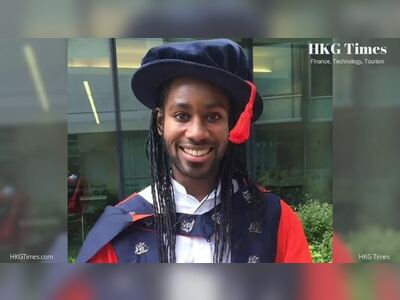
Cambridge Faces Calls for Independent Review of Jason Arday Appointment
The university is under pressure to examine its recruitment, research-integrity and complaint-handling systems after Arday resigned amid unresolved allegations about his work and credentials.
The University of Cambridge is facing calls for an independent review of how it appointed Jason Arday as its youngest Black professor, how it handled early warnings about his academic record and why it initially portrayed criticism of him as a malicious campaign before opening its own inquiry.
Arday resigned with immediate effect on 5 August from his professorship in the sociology of education and his fellowship at Jesus College.
His departure came hours after Cambridge said it had received “new information” concerning his academic qualifications and honorary appointments, and had begun an investigation.
The university also confirmed that separate complaints about alleged academic misconduct remained under review.
The central facts are clear.
Arday was appointed in 2023, aged 37, after a rapid rise through British higher education.
His account of overcoming autism, dyslexia, developmental delay, delayed speech and late literacy made his appointment an unusually powerful public story.
Cambridge presented him as a scholar of distinction whose career illustrated the barriers faced by under-represented groups in elite universities.
That account has now collided with a broad set of allegations.
Questions have been raised about passages in Arday’s 2015 doctoral thesis, the reliability of aspects of his published research, several qualifications and honorary appointments, and claims made in professional biographies and public accounts of his life.
Arday denies plagiarism and has denied deliberately fabricating his academic record.
He has accepted that mistakes were made in his doctorate, which he has partly attributed to inadequate supervision.
Liverpool John Moores University, which awarded the doctorate, previously investigated concerns about the thesis.
It concluded that the work did not amount to plagiarism and described citation problems as likely to be “honest and reasonable error”.
The doctorate remains valid.
That finding is important, but it does not dispose of the separate questions now being examined by Cambridge and Jesus College.
The university’s new inquiry is not confined to the doctorate.
It concerns new information about qualifications and honorary appointments, while research-misconduct complaints are being handled under a separate process.
Cambridge has not published the evidence it received, the precise scope of either investigation or a timetable for their completion.
It has said that a fair process requires it to make no further substantive comment while the cases continue.
The controversy has triggered a second, institutional question: whether Cambridge’s desire to improve representation among senior academics weakened its scrutiny of a candidate whose appointment carried symbolic importance.
Cambridge had publicly acknowledged that Black, Asian and minority ethnic academics were under-represented at professorial level.
A diversity target adopted in 2019 said the university aimed to reach at least the national benchmark for Black, Asian and minority ethnic professors, then 9.6%, and to exceed it.
The job advertisement for the sociology of education chair identified women, ethnic-minority candidates and disabled people as under-represented within the university community.
Such language is common in British university recruitment and does not establish that a candidate was appointed because of race, disability or personal biography rather than academic merit.
No public finding has concluded that Arday’s selection breached appointment rules, that other candidates were improperly excluded or that Cambridge lowered its academic standards.
Those claims remain allegations, not established facts.
Yet some academics have said the appointment raised questions at the time because they considered Arday’s publication record limited for a Cambridge professorship.
Others have argued that the university may have been attracted by a highly visible recruitment success that aligned with its public commitments on diversity and inclusion.
Senior academics are now asking for an external investigation that would examine the appointment process, the governance of research-integrity complaints and the institution’s response to concerns raised after Arday arrived.
The case has also exposed the danger of turning an academic-integrity inquiry into a proxy battle over diversity, equity and inclusion.
Arday’s appointment was celebrated because it challenged the assumption that only a conventional educational path can produce academic excellence.
The current allegations do not disprove the value of broadening access to academic careers, nor do they establish that diversity initiatives are incompatible with rigorous selection and research standards.
At the same time, equality programmes cannot be allowed to become a shield against normal verification.
High-profile appointments require especially careful due diligence because institutional endorsement amplifies a scholar’s authority, shapes students’ choices and influences public confidence in universities.
The appropriate standard is neither lower nor higher because a candidate belongs to an under-represented group; it is the same exacting standard applied to every senior academic appointment.
Concerns about Arday’s work did not arise only after his resignation.
Cambridge was alerted to questions about his doctorate and publications after his appointment.
Its initial position was that the awarding university and relevant journals were the proper bodies to consider allegations concerning research conducted elsewhere.
The university later defended Arday publicly, citing the earlier doctoral review and describing attempts to undermine his credibility as a “vile campaign”.
That response has become a focus of criticism because Cambridge changed position once further information emerged about Arday’s credentials and career claims.
The institution now faces questions about whether its policies were too narrow, whether its research-integrity procedures were sufficiently independent and whether senior leaders had adequate mechanisms for responding to credible concerns about a serving professor.
The issue is complicated by the political setting.
Some of the criticism of Arday has come from figures who have strongly opposed Cambridge’s diversity policies and whose views on race have themselves been the subject of controversy.
Arday and some supporters have said that racism and ideological hostility formed part of the campaign against him.
The existence of political motives or racist abuse would not resolve the factual allegations, but neither should it be ignored when judging the atmosphere in which the case unfolded.
There have also been complaints from students about Arday’s supervision and teaching.
Former students have alleged that meetings were missed or curtailed, feedback was inadequate and requests to change supervisor were difficult to pursue.
These accounts have not been tested in the current inquiries, and Cambridge has not made public findings on the allegations.
They nevertheless raise a wider issue: universities must have credible, accessible systems for students to report concerns about teaching and supervision without fear that a complaint will be dismissed as a personal or political attack.
Cambridge’s reputation rests partly on the assumption that exceptional public prestige is matched by robust internal scrutiny.
The Arday affair challenges that assumption because the university’s first instinct was to defend a celebrated appointment, while later developments compelled it to investigate the same broader questions it had previously sought to contain.
Arday has said that the personal cost of the controversy became unbearable and that his resignation should not be interpreted as an admission of the allegations.
His memoir, Great and Unfortunate Things, remains scheduled for publication.
Cambridge and Jesus College are continuing their separate processes, and the eventual findings will determine whether the case becomes a narrow account of one academic’s disputed record or a wider reckoning with how elite universities recruit, verify and protect their own standards.
Arday resigned with immediate effect on 5 August from his professorship in the sociology of education and his fellowship at Jesus College.
His departure came hours after Cambridge said it had received “new information” concerning his academic qualifications and honorary appointments, and had begun an investigation.
The university also confirmed that separate complaints about alleged academic misconduct remained under review.
The central facts are clear.
Arday was appointed in 2023, aged 37, after a rapid rise through British higher education.
His account of overcoming autism, dyslexia, developmental delay, delayed speech and late literacy made his appointment an unusually powerful public story.
Cambridge presented him as a scholar of distinction whose career illustrated the barriers faced by under-represented groups in elite universities.
That account has now collided with a broad set of allegations.
Questions have been raised about passages in Arday’s 2015 doctoral thesis, the reliability of aspects of his published research, several qualifications and honorary appointments, and claims made in professional biographies and public accounts of his life.
Arday denies plagiarism and has denied deliberately fabricating his academic record.
He has accepted that mistakes were made in his doctorate, which he has partly attributed to inadequate supervision.
Liverpool John Moores University, which awarded the doctorate, previously investigated concerns about the thesis.
It concluded that the work did not amount to plagiarism and described citation problems as likely to be “honest and reasonable error”.
The doctorate remains valid.
That finding is important, but it does not dispose of the separate questions now being examined by Cambridge and Jesus College.
The university’s new inquiry is not confined to the doctorate.
It concerns new information about qualifications and honorary appointments, while research-misconduct complaints are being handled under a separate process.
Cambridge has not published the evidence it received, the precise scope of either investigation or a timetable for their completion.
It has said that a fair process requires it to make no further substantive comment while the cases continue.
The controversy has triggered a second, institutional question: whether Cambridge’s desire to improve representation among senior academics weakened its scrutiny of a candidate whose appointment carried symbolic importance.
Cambridge had publicly acknowledged that Black, Asian and minority ethnic academics were under-represented at professorial level.
A diversity target adopted in 2019 said the university aimed to reach at least the national benchmark for Black, Asian and minority ethnic professors, then 9.6%, and to exceed it.
The job advertisement for the sociology of education chair identified women, ethnic-minority candidates and disabled people as under-represented within the university community.
Such language is common in British university recruitment and does not establish that a candidate was appointed because of race, disability or personal biography rather than academic merit.
No public finding has concluded that Arday’s selection breached appointment rules, that other candidates were improperly excluded or that Cambridge lowered its academic standards.
Those claims remain allegations, not established facts.
Yet some academics have said the appointment raised questions at the time because they considered Arday’s publication record limited for a Cambridge professorship.
Others have argued that the university may have been attracted by a highly visible recruitment success that aligned with its public commitments on diversity and inclusion.
Senior academics are now asking for an external investigation that would examine the appointment process, the governance of research-integrity complaints and the institution’s response to concerns raised after Arday arrived.
The case has also exposed the danger of turning an academic-integrity inquiry into a proxy battle over diversity, equity and inclusion.
Arday’s appointment was celebrated because it challenged the assumption that only a conventional educational path can produce academic excellence.
The current allegations do not disprove the value of broadening access to academic careers, nor do they establish that diversity initiatives are incompatible with rigorous selection and research standards.
At the same time, equality programmes cannot be allowed to become a shield against normal verification.
High-profile appointments require especially careful due diligence because institutional endorsement amplifies a scholar’s authority, shapes students’ choices and influences public confidence in universities.
The appropriate standard is neither lower nor higher because a candidate belongs to an under-represented group; it is the same exacting standard applied to every senior academic appointment.
Concerns about Arday’s work did not arise only after his resignation.
Cambridge was alerted to questions about his doctorate and publications after his appointment.
Its initial position was that the awarding university and relevant journals were the proper bodies to consider allegations concerning research conducted elsewhere.
The university later defended Arday publicly, citing the earlier doctoral review and describing attempts to undermine his credibility as a “vile campaign”.
That response has become a focus of criticism because Cambridge changed position once further information emerged about Arday’s credentials and career claims.
The institution now faces questions about whether its policies were too narrow, whether its research-integrity procedures were sufficiently independent and whether senior leaders had adequate mechanisms for responding to credible concerns about a serving professor.
The issue is complicated by the political setting.
Some of the criticism of Arday has come from figures who have strongly opposed Cambridge’s diversity policies and whose views on race have themselves been the subject of controversy.
Arday and some supporters have said that racism and ideological hostility formed part of the campaign against him.
The existence of political motives or racist abuse would not resolve the factual allegations, but neither should it be ignored when judging the atmosphere in which the case unfolded.
There have also been complaints from students about Arday’s supervision and teaching.
Former students have alleged that meetings were missed or curtailed, feedback was inadequate and requests to change supervisor were difficult to pursue.
These accounts have not been tested in the current inquiries, and Cambridge has not made public findings on the allegations.
They nevertheless raise a wider issue: universities must have credible, accessible systems for students to report concerns about teaching and supervision without fear that a complaint will be dismissed as a personal or political attack.
Cambridge’s reputation rests partly on the assumption that exceptional public prestige is matched by robust internal scrutiny.
The Arday affair challenges that assumption because the university’s first instinct was to defend a celebrated appointment, while later developments compelled it to investigate the same broader questions it had previously sought to contain.
Arday has said that the personal cost of the controversy became unbearable and that his resignation should not be interpreted as an admission of the allegations.
His memoir, Great and Unfortunate Things, remains scheduled for publication.
Cambridge and Jesus College are continuing their separate processes, and the eventual findings will determine whether the case becomes a narrow account of one academic’s disputed record or a wider reckoning with how elite universities recruit, verify and protect their own standards.
AI Disclaimer: An advanced artificial intelligence (AI) system generated the content of this page on its own. This innovative technology conducts extensive research from a variety of reliable sources, performs rigorous fact-checking and verification, cleans up and balances biased or manipulated content, and presents a minimal factual summary that is just enough yet essential for you to function as an informed and educated citizen. Please keep in mind, however, that this system is an evolving technology, and as a result, the article may contain accidental inaccuracies or errors. We urge you to help us improve our site by reporting any inaccuracies you find using the "Contact Us" link at the bottom of this page. Your helpful feedback helps us improve our system and deliver more precise content. When you find an article of interest here, please look for the full and extensive coverage of this topic in traditional news sources, as they are written by professional journalists that we try to support, not replace. We appreciate your understanding and assistance.