Chinese EV Makers Target Europe’s Mass Market as Analysts Predict Major Share Gains
JPMorgan’s forecast that Chinese smart cars could capture one-fifth of western Europe’s market by 2028 reflects a deeper shift in automotive power, manufacturing strategy and electric vehicle economics.
Chinese automakers are rapidly transforming from export challengers into embedded competitors inside Europe’s car industry, and that structural shift is driving forecasts that Chinese-developed smart vehicles could command roughly 20 per cent of western European sales within the next two years.
The story is fundamentally system-driven: it is about the collision between Europe’s electrification policies, China’s manufacturing scale, software-heavy vehicle design and the rising inability of many legacy automakers to match Chinese cost structures.
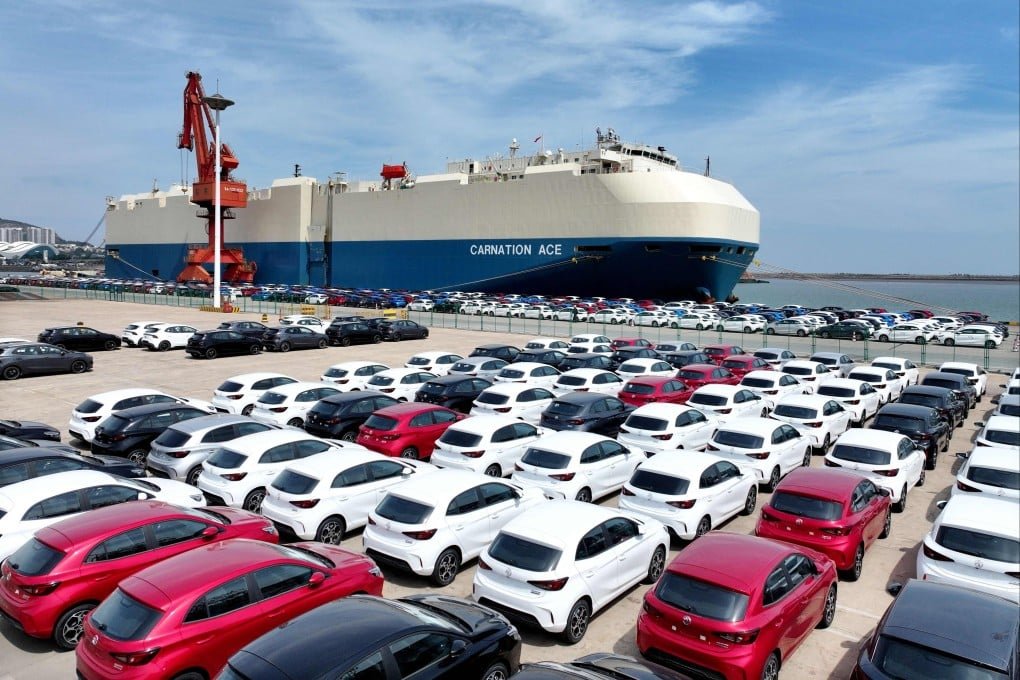
The latest projection from JPMorgan estimates that Chinese brands could sell about 2.5 million vehicles annually in western Europe by 2028, up sharply from roughly 1 million units last year.
What is confirmed is that Chinese manufacturers are already accelerating their presence across Europe through exports, local assembly, joint ventures and technology-sharing agreements rather than relying solely on direct imports.
The shift is no longer centred only on low-cost electric cars.
Chinese manufacturers now compete aggressively in battery systems, autonomous driving software, infotainment ecosystems, charging efficiency and vertically integrated supply chains.
Industry analysts increasingly describe the competition as a “smart car” contest rather than a simple EV race.
The strongest Chinese players include BYD, Geely, SAIC, Chery and Leapmotor.
Several are now building or planning factories in Europe to bypass European Union tariffs on Chinese-built electric vehicles and to reduce political resistance tied to imports.
Production projects in Hungary, Spain and other European locations are moving from proposal stage into implementation.
One of the clearest signs of the changing market came this month when Stellantis and Leapmotor expanded their strategic partnership to include joint EV production in Spain.
The arrangement goes beyond distribution and effectively turns Chinese electric architecture into part of the industrial base of a major Western automaker.
Under the plan, Opel-branded electric SUVs will incorporate Leapmotor technology and components while being manufactured in Europe.
That marks a significant reversal in the historical direction of automotive technology transfer.
For decades, Chinese firms relied heavily on Western engineering and joint ventures to gain expertise.
Now several European manufacturers increasingly depend on Chinese battery systems, software platforms and lower-cost EV architectures to remain competitive in entry-level and mid-market segments.
The underlying economic pressure is severe.
European automakers face high labour costs, expensive energy, fragmented battery supply chains and regulatory demands tied to emissions reduction.
Chinese companies, by contrast, benefit from dense domestic supplier networks, large-scale battery manufacturing capacity and years of intense price competition inside China’s own EV market.
The result is a widening affordability gap.
Chinese manufacturers have demonstrated an ability to deliver EVs with advanced software features at price points many European competitors struggle to match profitably.
In some segments, Chinese-made vehicles sell for thousands of euros less while offering faster charging, longer range and more advanced driver-assistance systems.
That advantage has become particularly important as Europe’s EV transition enters a politically sensitive phase.
Governments continue tightening emissions rules and phasing out combustion-engine sales, but consumer demand has become more price-sensitive amid slower economic growth and high borrowing costs.
Affordable EV supply is now central to maintaining momentum in Europe’s green transition.
Chinese automakers are positioning themselves directly into that gap.
Companies including BYD and Leapmotor are aggressively targeting compact SUVs, small urban EVs and mid-priced family vehicles, precisely the categories where European manufacturers historically dominated.
The strategic threat to Europe’s legacy automakers is uneven.
Premium brands such as BMW and Mercedes-Benz retain strong margins, global brand loyalty and engineering prestige.
The pressure is greatest on mass-market and second-tier manufacturers competing in price-sensitive segments.
Analysts increasingly describe the coming market fight as a zero-sum contest in which Chinese gains are likely to come directly from incumbent European producers.
Trade policy has not stopped the expansion.
The European Union imposed additional tariffs on Chinese EV imports after investigations into state subsidies, but Chinese manufacturers adapted quickly by accelerating local production plans and deepening partnerships with European firms.
Some Western automakers have also chosen cooperation over confrontation, calculating that access to Chinese EV technology is necessary to defend market share.
The technology dimension is equally important.
Chinese EV makers have built ecosystems around software integration, over-the-air updates, AI-assisted driving systems and digital cockpits.
These features resonate strongly with younger buyers who increasingly evaluate vehicles as connected technology products rather than purely mechanical machines.
Several Chinese firms are also pushing aggressively into advanced driver-assistance systems for Europe.
Leapmotor has already outlined plans to roll out smart-driving technologies in European vehicles beginning in 2026. That timeline places Chinese brands directly into competition with established European and American software ecosystems.
Political concerns remain substantial.
European policymakers worry that dependence on Chinese EV supply chains could replicate Europe’s earlier dependence on Russian energy or Asian semiconductor production.
Security officials have also raised concerns over vehicle data collection, connected-car infrastructure and software governance.
At the same time, European governments face a difficult balancing act.
Restricting Chinese competition too aggressively risks slowing EV adoption, raising consumer prices and weakening climate-transition targets.
Allowing unrestricted expansion risks accelerating industrial decline in parts of Europe’s traditional automotive sector.
The United States is watching the shift closely because it intersects directly with the broader strategic rivalry between Washington and Beijing.
The Trump administration has continued pursuing tighter technology controls on advanced semiconductors and AI-related exports to China, but the rapid international expansion of Chinese EV and smart-car companies demonstrates that China’s industrial competitiveness is broadening well beyond chips alone.
Investors increasingly see the European EV market as an early indicator of a larger global realignment.
Chinese brands are already expanding aggressively into Latin America, Southeast Asia, the Middle East and parts of Africa.
Europe matters because it has historically been one of the world’s most difficult and brand-loyal automotive markets.
If Chinese companies achieve anything close to the market-share levels projected by JPMorgan, the consequences will extend far beyond car sales.
Europe’s supplier networks, manufacturing employment, battery strategy and industrial policy would all face structural pressure.
The next phase of competition is likely to revolve less around whether Chinese EVs can enter Europe and more around how deeply Chinese technology becomes integrated into Europe’s own automotive future.
The story is fundamentally system-driven: it is about the collision between Europe’s electrification policies, China’s manufacturing scale, software-heavy vehicle design and the rising inability of many legacy automakers to match Chinese cost structures.
The latest projection from JPMorgan estimates that Chinese brands could sell about 2.5 million vehicles annually in western Europe by 2028, up sharply from roughly 1 million units last year.
What is confirmed is that Chinese manufacturers are already accelerating their presence across Europe through exports, local assembly, joint ventures and technology-sharing agreements rather than relying solely on direct imports.
The shift is no longer centred only on low-cost electric cars.
Chinese manufacturers now compete aggressively in battery systems, autonomous driving software, infotainment ecosystems, charging efficiency and vertically integrated supply chains.
Industry analysts increasingly describe the competition as a “smart car” contest rather than a simple EV race.
The strongest Chinese players include BYD, Geely, SAIC, Chery and Leapmotor.
Several are now building or planning factories in Europe to bypass European Union tariffs on Chinese-built electric vehicles and to reduce political resistance tied to imports.
Production projects in Hungary, Spain and other European locations are moving from proposal stage into implementation.
One of the clearest signs of the changing market came this month when Stellantis and Leapmotor expanded their strategic partnership to include joint EV production in Spain.
The arrangement goes beyond distribution and effectively turns Chinese electric architecture into part of the industrial base of a major Western automaker.
Under the plan, Opel-branded electric SUVs will incorporate Leapmotor technology and components while being manufactured in Europe.
That marks a significant reversal in the historical direction of automotive technology transfer.
For decades, Chinese firms relied heavily on Western engineering and joint ventures to gain expertise.
Now several European manufacturers increasingly depend on Chinese battery systems, software platforms and lower-cost EV architectures to remain competitive in entry-level and mid-market segments.
The underlying economic pressure is severe.
European automakers face high labour costs, expensive energy, fragmented battery supply chains and regulatory demands tied to emissions reduction.
Chinese companies, by contrast, benefit from dense domestic supplier networks, large-scale battery manufacturing capacity and years of intense price competition inside China’s own EV market.
The result is a widening affordability gap.
Chinese manufacturers have demonstrated an ability to deliver EVs with advanced software features at price points many European competitors struggle to match profitably.
In some segments, Chinese-made vehicles sell for thousands of euros less while offering faster charging, longer range and more advanced driver-assistance systems.
That advantage has become particularly important as Europe’s EV transition enters a politically sensitive phase.
Governments continue tightening emissions rules and phasing out combustion-engine sales, but consumer demand has become more price-sensitive amid slower economic growth and high borrowing costs.
Affordable EV supply is now central to maintaining momentum in Europe’s green transition.
Chinese automakers are positioning themselves directly into that gap.
Companies including BYD and Leapmotor are aggressively targeting compact SUVs, small urban EVs and mid-priced family vehicles, precisely the categories where European manufacturers historically dominated.
The strategic threat to Europe’s legacy automakers is uneven.
Premium brands such as BMW and Mercedes-Benz retain strong margins, global brand loyalty and engineering prestige.
The pressure is greatest on mass-market and second-tier manufacturers competing in price-sensitive segments.
Analysts increasingly describe the coming market fight as a zero-sum contest in which Chinese gains are likely to come directly from incumbent European producers.
Trade policy has not stopped the expansion.
The European Union imposed additional tariffs on Chinese EV imports after investigations into state subsidies, but Chinese manufacturers adapted quickly by accelerating local production plans and deepening partnerships with European firms.
Some Western automakers have also chosen cooperation over confrontation, calculating that access to Chinese EV technology is necessary to defend market share.
The technology dimension is equally important.
Chinese EV makers have built ecosystems around software integration, over-the-air updates, AI-assisted driving systems and digital cockpits.
These features resonate strongly with younger buyers who increasingly evaluate vehicles as connected technology products rather than purely mechanical machines.
Several Chinese firms are also pushing aggressively into advanced driver-assistance systems for Europe.
Leapmotor has already outlined plans to roll out smart-driving technologies in European vehicles beginning in 2026. That timeline places Chinese brands directly into competition with established European and American software ecosystems.
Political concerns remain substantial.
European policymakers worry that dependence on Chinese EV supply chains could replicate Europe’s earlier dependence on Russian energy or Asian semiconductor production.
Security officials have also raised concerns over vehicle data collection, connected-car infrastructure and software governance.
At the same time, European governments face a difficult balancing act.
Restricting Chinese competition too aggressively risks slowing EV adoption, raising consumer prices and weakening climate-transition targets.
Allowing unrestricted expansion risks accelerating industrial decline in parts of Europe’s traditional automotive sector.
The United States is watching the shift closely because it intersects directly with the broader strategic rivalry between Washington and Beijing.
The Trump administration has continued pursuing tighter technology controls on advanced semiconductors and AI-related exports to China, but the rapid international expansion of Chinese EV and smart-car companies demonstrates that China’s industrial competitiveness is broadening well beyond chips alone.
Investors increasingly see the European EV market as an early indicator of a larger global realignment.
Chinese brands are already expanding aggressively into Latin America, Southeast Asia, the Middle East and parts of Africa.
Europe matters because it has historically been one of the world’s most difficult and brand-loyal automotive markets.
If Chinese companies achieve anything close to the market-share levels projected by JPMorgan, the consequences will extend far beyond car sales.
Europe’s supplier networks, manufacturing employment, battery strategy and industrial policy would all face structural pressure.
The next phase of competition is likely to revolve less around whether Chinese EVs can enter Europe and more around how deeply Chinese technology becomes integrated into Europe’s own automotive future.
AI Disclaimer: An advanced artificial intelligence (AI) system generated the content of this page on its own. This innovative technology conducts extensive research from a variety of reliable sources, performs rigorous fact-checking and verification, cleans up and balances biased or manipulated content, and presents a minimal factual summary that is just enough yet essential for you to function as an informed and educated citizen. Please keep in mind, however, that this system is an evolving technology, and as a result, the article may contain accidental inaccuracies or errors. We urge you to help us improve our site by reporting any inaccuracies you find using the "Contact Us" link at the bottom of this page. Your helpful feedback helps us improve our system and deliver more precise content. When you find an article of interest here, please look for the full and extensive coverage of this topic in traditional news sources, as they are written by professional journalists that we try to support, not replace. We appreciate your understanding and assistance.