Goldman Sachs’ Hong Kong AI Ban Reveals the New Fault Line in US-China Finance
The bank’s decision to block Anthropic’s Claude models for Hong Kong staff shows how geopolitical controls, data security fears and AI export tensions are reshaping global finance.
Goldman Sachs, one of the world’s most influential investment banks, has withdrawn access to Anthropic’s artificial intelligence models for employees in Hong Kong, exposing how rapidly the US-China technology confrontation is spilling into global banking operations.
What is confirmed is that bankers in Goldman’s Hong Kong offices recently lost access to Anthropic’s Claude AI models through the bank’s internal AI platform.
Other major AI systems, including OpenAI’s ChatGPT and Google’s Gemini, reportedly remain available to staff through the same infrastructure.
The restriction appears specific to Anthropic.
The decision was not triggered by a public cyberattack or a regulatory ban.
The key issue is contractual and geopolitical risk.
Goldman reportedly adopted a stricter interpretation of its agreement with Anthropic after consultations with the AI company, concluding that Hong Kong employees should no longer access Anthropic products.
That distinction matters because Hong Kong occupies a legally and commercially ambiguous position in the global technology system.
The territory retains separate financial and trade mechanisms from mainland China in some sectors, but US companies increasingly assess Hong Kong through the lens of broader China-related security exposure.
The AI industry is becoming especially sensitive to those concerns.
Anthropic has stated that Claude models were never officially supported in Hong Kong.
That clarification reflects a broader trend among American AI companies, which are tightening geographic access controls as Washington escalates scrutiny of advanced AI exports, semiconductor technology and cross-border data flows.
The development illustrates how generative AI is no longer treated as a neutral productivity tool.
Large language models are increasingly viewed as strategic infrastructure with potential military, intelligence, financial and industrial implications.
American officials and AI firms have publicly warned about the possibility of model distillation, data extraction and unauthorized replication by foreign actors, particularly in China.
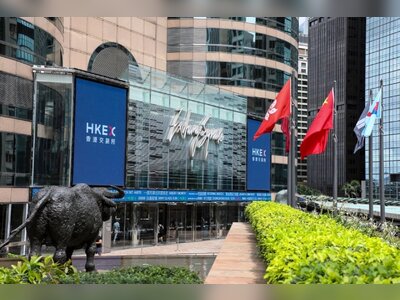
Hong Kong has become a pressure point because it sits between Western financial systems and mainland Chinese business networks.
Global banks use the city as their primary Asia-Pacific hub, handling sensitive mergers, capital raising, sovereign financing and corporate advisory work.
Restricting access to advanced AI systems inside that environment reflects growing concern about where data travels, who can access it and how proprietary models might be exposed.
The timing is significant because Goldman Sachs has simultaneously expanded its relationship with Anthropic.
Earlier this year, Goldman executives publicly discussed deploying AI agents based on Anthropic technology for accounting, compliance, onboarding and operational automation.
The bank has been experimenting with AI systems capable of handling increasingly complex internal workflows.
That creates an apparent contradiction: Goldman is investing heavily in AI integration while limiting where some of those tools can be used.
The contradiction is not technological.
It is geopolitical.
The financial industry is moving aggressively toward AI-assisted operations because the economic incentives are substantial.
Banks see opportunities to reduce repetitive labor, accelerate document analysis, automate compliance checks and improve client servicing.
Large institutions are racing to embed AI systems into core operations before competitors gain efficiency advantages.
But financial firms also operate under strict confidentiality and regulatory obligations.
Investment banks manage market-sensitive information, merger negotiations, trading strategies and client data whose exposure could trigger legal liability or systemic risk.
AI systems introduce new uncertainty around data handling, storage and cross-border access.
Hong Kong’s position complicates those calculations further.
While many Western digital platforms remain accessible there, mainland China blocks several major US AI products outright.
At the same time, American AI firms have become more cautious about providing advanced services in jurisdictions viewed as vulnerable to Chinese state or commercial access.
The broader strategic backdrop is escalating US-China competition over artificial intelligence dominance.
Washington has tightened restrictions on advanced semiconductor exports, pressured allies to limit technology transfers and expanded warnings about Chinese acquisition of sensitive technologies.
China, meanwhile, is accelerating development of domestic AI ecosystems and reducing dependence on Western platforms.
For Hong Kong, the implications extend beyond one bank or one AI vendor.
The city’s long-standing role depended on functioning as a trusted bridge between China and global capital markets.
Technology fragmentation increasingly challenges that model.
If major Western firms begin applying mainland-level AI restrictions to Hong Kong operations, the territory risks losing part of its value as a frictionless international business hub.
The incident also signals how corporate compliance departments are becoming de facto geopolitical enforcement mechanisms.
Instead of waiting for formal sanctions or explicit government bans, multinational firms are proactively narrowing exposure to legal, regulatory and reputational risk.
Banks across Asia are now reassessing how employees use generative AI tools internally.
Financial regulators have already raised concerns about hallucinated outputs, cybersecurity vulnerabilities, model transparency and operational dependence on external AI providers.
The spread of autonomous AI agents inside banking systems has intensified those concerns because the tools are moving beyond simple chat functions into transaction processing and decision support.
The immediate consequence is operational fragmentation.
Employees in different jurisdictions may soon have access to different AI capabilities depending on local regulations, licensing arrangements and geopolitical exposure.
That undermines the idea of globally standardized digital infrastructure inside multinational firms.
The longer-term consequence is more profound.
Artificial intelligence is rapidly becoming part of the strategic architecture of international finance, and access to advanced models is beginning to follow the same political logic that already governs semiconductors, telecommunications networks and critical infrastructure.
Goldman’s restriction on Anthropic access in Hong Kong demonstrates that the separation between financial globalization and technological nationalism is breaking down.
The world’s largest banks are now redesigning internal systems around geopolitical boundaries that did not exist in global finance a decade ago.
What is confirmed is that bankers in Goldman’s Hong Kong offices recently lost access to Anthropic’s Claude AI models through the bank’s internal AI platform.
Other major AI systems, including OpenAI’s ChatGPT and Google’s Gemini, reportedly remain available to staff through the same infrastructure.
The restriction appears specific to Anthropic.
The decision was not triggered by a public cyberattack or a regulatory ban.
The key issue is contractual and geopolitical risk.
Goldman reportedly adopted a stricter interpretation of its agreement with Anthropic after consultations with the AI company, concluding that Hong Kong employees should no longer access Anthropic products.
That distinction matters because Hong Kong occupies a legally and commercially ambiguous position in the global technology system.
The territory retains separate financial and trade mechanisms from mainland China in some sectors, but US companies increasingly assess Hong Kong through the lens of broader China-related security exposure.
The AI industry is becoming especially sensitive to those concerns.
Anthropic has stated that Claude models were never officially supported in Hong Kong.
That clarification reflects a broader trend among American AI companies, which are tightening geographic access controls as Washington escalates scrutiny of advanced AI exports, semiconductor technology and cross-border data flows.
The development illustrates how generative AI is no longer treated as a neutral productivity tool.
Large language models are increasingly viewed as strategic infrastructure with potential military, intelligence, financial and industrial implications.
American officials and AI firms have publicly warned about the possibility of model distillation, data extraction and unauthorized replication by foreign actors, particularly in China.
Hong Kong has become a pressure point because it sits between Western financial systems and mainland Chinese business networks.
Global banks use the city as their primary Asia-Pacific hub, handling sensitive mergers, capital raising, sovereign financing and corporate advisory work.
Restricting access to advanced AI systems inside that environment reflects growing concern about where data travels, who can access it and how proprietary models might be exposed.
The timing is significant because Goldman Sachs has simultaneously expanded its relationship with Anthropic.
Earlier this year, Goldman executives publicly discussed deploying AI agents based on Anthropic technology for accounting, compliance, onboarding and operational automation.
The bank has been experimenting with AI systems capable of handling increasingly complex internal workflows.
That creates an apparent contradiction: Goldman is investing heavily in AI integration while limiting where some of those tools can be used.
The contradiction is not technological.
It is geopolitical.
The financial industry is moving aggressively toward AI-assisted operations because the economic incentives are substantial.
Banks see opportunities to reduce repetitive labor, accelerate document analysis, automate compliance checks and improve client servicing.
Large institutions are racing to embed AI systems into core operations before competitors gain efficiency advantages.
But financial firms also operate under strict confidentiality and regulatory obligations.
Investment banks manage market-sensitive information, merger negotiations, trading strategies and client data whose exposure could trigger legal liability or systemic risk.
AI systems introduce new uncertainty around data handling, storage and cross-border access.
Hong Kong’s position complicates those calculations further.
While many Western digital platforms remain accessible there, mainland China blocks several major US AI products outright.
At the same time, American AI firms have become more cautious about providing advanced services in jurisdictions viewed as vulnerable to Chinese state or commercial access.
The broader strategic backdrop is escalating US-China competition over artificial intelligence dominance.
Washington has tightened restrictions on advanced semiconductor exports, pressured allies to limit technology transfers and expanded warnings about Chinese acquisition of sensitive technologies.
China, meanwhile, is accelerating development of domestic AI ecosystems and reducing dependence on Western platforms.
For Hong Kong, the implications extend beyond one bank or one AI vendor.
The city’s long-standing role depended on functioning as a trusted bridge between China and global capital markets.
Technology fragmentation increasingly challenges that model.
If major Western firms begin applying mainland-level AI restrictions to Hong Kong operations, the territory risks losing part of its value as a frictionless international business hub.
The incident also signals how corporate compliance departments are becoming de facto geopolitical enforcement mechanisms.
Instead of waiting for formal sanctions or explicit government bans, multinational firms are proactively narrowing exposure to legal, regulatory and reputational risk.
Banks across Asia are now reassessing how employees use generative AI tools internally.
Financial regulators have already raised concerns about hallucinated outputs, cybersecurity vulnerabilities, model transparency and operational dependence on external AI providers.
The spread of autonomous AI agents inside banking systems has intensified those concerns because the tools are moving beyond simple chat functions into transaction processing and decision support.
The immediate consequence is operational fragmentation.
Employees in different jurisdictions may soon have access to different AI capabilities depending on local regulations, licensing arrangements and geopolitical exposure.
That undermines the idea of globally standardized digital infrastructure inside multinational firms.
The longer-term consequence is more profound.
Artificial intelligence is rapidly becoming part of the strategic architecture of international finance, and access to advanced models is beginning to follow the same political logic that already governs semiconductors, telecommunications networks and critical infrastructure.
Goldman’s restriction on Anthropic access in Hong Kong demonstrates that the separation between financial globalization and technological nationalism is breaking down.
The world’s largest banks are now redesigning internal systems around geopolitical boundaries that did not exist in global finance a decade ago.
AI Disclaimer: An advanced artificial intelligence (AI) system generated the content of this page on its own. This innovative technology conducts extensive research from a variety of reliable sources, performs rigorous fact-checking and verification, cleans up and balances biased or manipulated content, and presents a minimal factual summary that is just enough yet essential for you to function as an informed and educated citizen. Please keep in mind, however, that this system is an evolving technology, and as a result, the article may contain accidental inaccuracies or errors. We urge you to help us improve our site by reporting any inaccuracies you find using the "Contact Us" link at the bottom of this page. Your helpful feedback helps us improve our system and deliver more precise content. When you find an article of interest here, please look for the full and extensive coverage of this topic in traditional news sources, as they are written by professional journalists that we try to support, not replace. We appreciate your understanding and assistance.