Hong Kong Pushes to Become Uzbekistan’s Commercial Bridge Into China
A new wave of trade diplomacy between Hong Kong and Uzbekistan highlights Beijing’s broader effort to deepen economic integration with Central Asia through finance, logistics and Belt and Road infrastructure.
The Hong Kong government is actively urging Uzbek companies to use the city as a gateway into mainland China, reflecting a broader strategic push to position Hong Kong as the primary international platform connecting foreign businesses to the Chinese market.
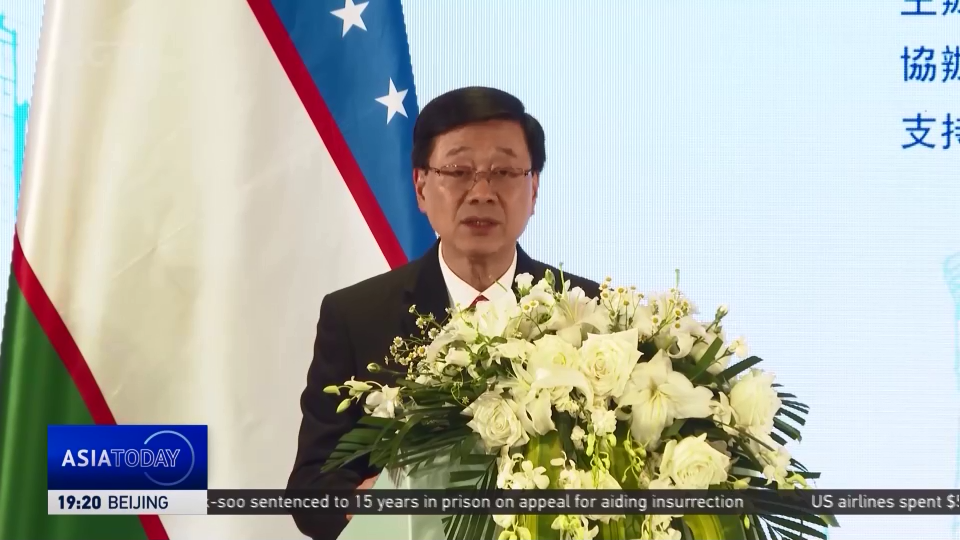
What is confirmed is that senior Hong Kong officials, led by Chief Executive John Lee, used a high-level visit by Uzbekistan Prime Minister Abdulla Aripov and a large Uzbek business delegation to promote the city as a commercial, financial and legal hub for Central Asian firms seeking access to China.
The meetings focused on trade expansion, investment flows, logistics, financing and technology cooperation.
The push comes at a critical moment for both sides.
Uzbekistan is attempting to accelerate industrial growth, diversify exports and deepen ties with Asian markets as global supply chains continue shifting eastward.
Hong Kong, meanwhile, is under pressure to reinforce its international business relevance amid slower capital markets activity, geopolitical tensions and growing competition from mainland Chinese financial centers.
The mechanism behind the strategy is straightforward.
Hong Kong offers a separate legal and financial system under the “one country, two systems” framework, allowing foreign firms to operate in a familiar international commercial environment while maintaining access to mainland Chinese markets.
Officials are presenting that structure as especially attractive for companies from emerging economies that may lack direct experience operating inside China’s regulatory system.
Hong Kong authorities are emphasizing several advantages: unrestricted capital movement, deep banking and insurance networks, arbitration services, international accounting standards and direct access to Chinese supply chains.
Uzbek companies are also being encouraged to establish regional headquarters, raise capital in Hong Kong and use the city’s logistics infrastructure to reach mainland customers.
The visit by the Uzbek delegation was unusually large and commercially focused.
More than 150 Uzbek business representatives traveled to Hong Kong for trade events, investment forums and bilateral meetings.
Uzbek participants showcased domestic products under a “Made in Uzbekistan” initiative while seeking partnerships in sectors including agriculture, energy, industrial manufacturing, transportation and digital technology.
Several bilateral agreements were signed or advanced during the visit, including cooperation initiatives covering air cargo, infrastructure, energy and industrial development.
Officials from both sides framed the relationship within China’s Belt and Road Initiative, which has increasingly shifted from large-scale infrastructure lending toward trade integration, logistics connectivity and industrial partnerships.
The stakes extend beyond simple bilateral trade.
China views Central Asia as strategically important for energy security, westbound transport routes and regional influence.
Uzbekistan, the most populous country in Central Asia, occupies a central geographic position in that strategy.
Hong Kong’s role is to function as the offshore financing and business coordination center supporting those links.
The economic logic is reinforced by changing global trade dynamics.
Central Asian economies are attempting to capitalize on manufacturing diversification, transport corridors bypassing Russia-related disruptions and stronger Asian demand for commodities and industrial goods.
Hong Kong is positioning itself as the transaction hub through which investment, financing and legal coordination can move.
For Hong Kong, the campaign also serves a domestic political and economic purpose.
The city has spent the past several years trying to demonstrate that it remains indispensable to China’s international economic engagement despite political tensions with Western governments and concerns over the territory’s autonomy.
By strengthening ties with Central Asia, the Middle East and Southeast Asia, Hong Kong officials are attempting to widen the city’s commercial base beyond traditional Western capital flows.
The initiative aligns with Beijing’s broader strategic reorientation toward emerging markets and Global South economies.
Chinese policymakers have intensified efforts to strengthen trade and investment relationships with countries seen as less exposed to Western political pressure or sanctions frameworks.
Hong Kong’s financial infrastructure is being marketed as a neutral and internationally connected platform within that effort.
Uzbekistan also sees practical advantages.
The country is pursuing rapid modernization programs that require foreign investment, export expansion and technology transfer.
Access to Hong Kong’s banking system, professional services sector and investor networks could provide Uzbek firms with financing channels and commercial exposure difficult to achieve domestically.
At the same time, the relationship remains economically asymmetric.
China’s economy dwarfs that of Uzbekistan, and many Central Asian countries remain heavily dependent on Chinese infrastructure financing, industrial demand and trade access.
Hong Kong’s gateway pitch therefore reflects both opportunity and dependency: Central Asian firms gain access to China’s vast market, while China deepens its economic footprint across Eurasia.
The immediate consequence is likely to be increased institutional cooperation, more trade missions and expanded cross-border investment activity between Hong Kong and Uzbekistan.
Officials from both sides have already committed to further economic forums, educational exchanges and business development programs designed to anchor Hong Kong more deeply into Central Asia’s emerging trade architecture.
What is confirmed is that senior Hong Kong officials, led by Chief Executive John Lee, used a high-level visit by Uzbekistan Prime Minister Abdulla Aripov and a large Uzbek business delegation to promote the city as a commercial, financial and legal hub for Central Asian firms seeking access to China.
The meetings focused on trade expansion, investment flows, logistics, financing and technology cooperation.
The push comes at a critical moment for both sides.
Uzbekistan is attempting to accelerate industrial growth, diversify exports and deepen ties with Asian markets as global supply chains continue shifting eastward.
Hong Kong, meanwhile, is under pressure to reinforce its international business relevance amid slower capital markets activity, geopolitical tensions and growing competition from mainland Chinese financial centers.
The mechanism behind the strategy is straightforward.
Hong Kong offers a separate legal and financial system under the “one country, two systems” framework, allowing foreign firms to operate in a familiar international commercial environment while maintaining access to mainland Chinese markets.
Officials are presenting that structure as especially attractive for companies from emerging economies that may lack direct experience operating inside China’s regulatory system.
Hong Kong authorities are emphasizing several advantages: unrestricted capital movement, deep banking and insurance networks, arbitration services, international accounting standards and direct access to Chinese supply chains.
Uzbek companies are also being encouraged to establish regional headquarters, raise capital in Hong Kong and use the city’s logistics infrastructure to reach mainland customers.
The visit by the Uzbek delegation was unusually large and commercially focused.
More than 150 Uzbek business representatives traveled to Hong Kong for trade events, investment forums and bilateral meetings.
Uzbek participants showcased domestic products under a “Made in Uzbekistan” initiative while seeking partnerships in sectors including agriculture, energy, industrial manufacturing, transportation and digital technology.
Several bilateral agreements were signed or advanced during the visit, including cooperation initiatives covering air cargo, infrastructure, energy and industrial development.
Officials from both sides framed the relationship within China’s Belt and Road Initiative, which has increasingly shifted from large-scale infrastructure lending toward trade integration, logistics connectivity and industrial partnerships.
The stakes extend beyond simple bilateral trade.
China views Central Asia as strategically important for energy security, westbound transport routes and regional influence.
Uzbekistan, the most populous country in Central Asia, occupies a central geographic position in that strategy.
Hong Kong’s role is to function as the offshore financing and business coordination center supporting those links.
The economic logic is reinforced by changing global trade dynamics.
Central Asian economies are attempting to capitalize on manufacturing diversification, transport corridors bypassing Russia-related disruptions and stronger Asian demand for commodities and industrial goods.
Hong Kong is positioning itself as the transaction hub through which investment, financing and legal coordination can move.
For Hong Kong, the campaign also serves a domestic political and economic purpose.
The city has spent the past several years trying to demonstrate that it remains indispensable to China’s international economic engagement despite political tensions with Western governments and concerns over the territory’s autonomy.
By strengthening ties with Central Asia, the Middle East and Southeast Asia, Hong Kong officials are attempting to widen the city’s commercial base beyond traditional Western capital flows.
The initiative aligns with Beijing’s broader strategic reorientation toward emerging markets and Global South economies.
Chinese policymakers have intensified efforts to strengthen trade and investment relationships with countries seen as less exposed to Western political pressure or sanctions frameworks.
Hong Kong’s financial infrastructure is being marketed as a neutral and internationally connected platform within that effort.
Uzbekistan also sees practical advantages.
The country is pursuing rapid modernization programs that require foreign investment, export expansion and technology transfer.
Access to Hong Kong’s banking system, professional services sector and investor networks could provide Uzbek firms with financing channels and commercial exposure difficult to achieve domestically.
At the same time, the relationship remains economically asymmetric.
China’s economy dwarfs that of Uzbekistan, and many Central Asian countries remain heavily dependent on Chinese infrastructure financing, industrial demand and trade access.
Hong Kong’s gateway pitch therefore reflects both opportunity and dependency: Central Asian firms gain access to China’s vast market, while China deepens its economic footprint across Eurasia.
The immediate consequence is likely to be increased institutional cooperation, more trade missions and expanded cross-border investment activity between Hong Kong and Uzbekistan.
Officials from both sides have already committed to further economic forums, educational exchanges and business development programs designed to anchor Hong Kong more deeply into Central Asia’s emerging trade architecture.
AI Disclaimer: An advanced artificial intelligence (AI) system generated the content of this page on its own. This innovative technology conducts extensive research from a variety of reliable sources, performs rigorous fact-checking and verification, cleans up and balances biased or manipulated content, and presents a minimal factual summary that is just enough yet essential for you to function as an informed and educated citizen. Please keep in mind, however, that this system is an evolving technology, and as a result, the article may contain accidental inaccuracies or errors. We urge you to help us improve our site by reporting any inaccuracies you find using the "Contact Us" link at the bottom of this page. Your helpful feedback helps us improve our system and deliver more precise content. When you find an article of interest here, please look for the full and extensive coverage of this topic in traditional news sources, as they are written by professional journalists that we try to support, not replace. We appreciate your understanding and assistance.