Hong Kong’s Proposed Ride-Hailing Quotas Risk Freezing Competition in Urban Transport
Debate over regulating app-based transport services has intensified as policymakers weigh caps on ride-hailing vehicles that critics say could protect incumbents while limiting consumer choice and innovation.
Hong Kong’s effort to formalize regulation of ride-hailing services has entered a politically sensitive phase as officials consider quota-based licensing systems that industry participants and economists warn could restrict competition, raise prices and slow modernization of the city’s transport sector.
The issue centers on how Hong Kong should regulate app-based ride-hailing operators such as Uber and locally active transport platforms in a market historically dominated by the city’s tightly controlled taxi licensing regime.
What is confirmed is that authorities are studying new legal frameworks that could include caps on the number of ride-hailing vehicles permitted to operate legally.
The debate reflects a structural collision between two systems.
Hong Kong’s traditional taxi market is built around fixed license scarcity.
Taxi licenses have historically traded at extremely high values because the government strictly limited supply for decades.
Ride-hailing platforms disrupted that structure by connecting passengers directly with drivers through digital applications, bypassing many of the economic assumptions underpinning the legacy licensing model.
The key issue is whether regulation is being designed primarily to modernize urban transport or to preserve the financial value of existing taxi licenses.
Taxi owners and industry groups argue that unrestricted ride-hailing competition would undermine livelihoods and destroy asset values tied to licenses that operators purchased under a regulated system.
Ride-hailing advocates counter that protecting artificial scarcity comes at the expense of service quality, pricing efficiency and consumer convenience.
Hong Kong’s taxi sector has faced mounting criticism in recent years over service standards, refusal of rides, aging vehicles and resistance to digital payment systems.
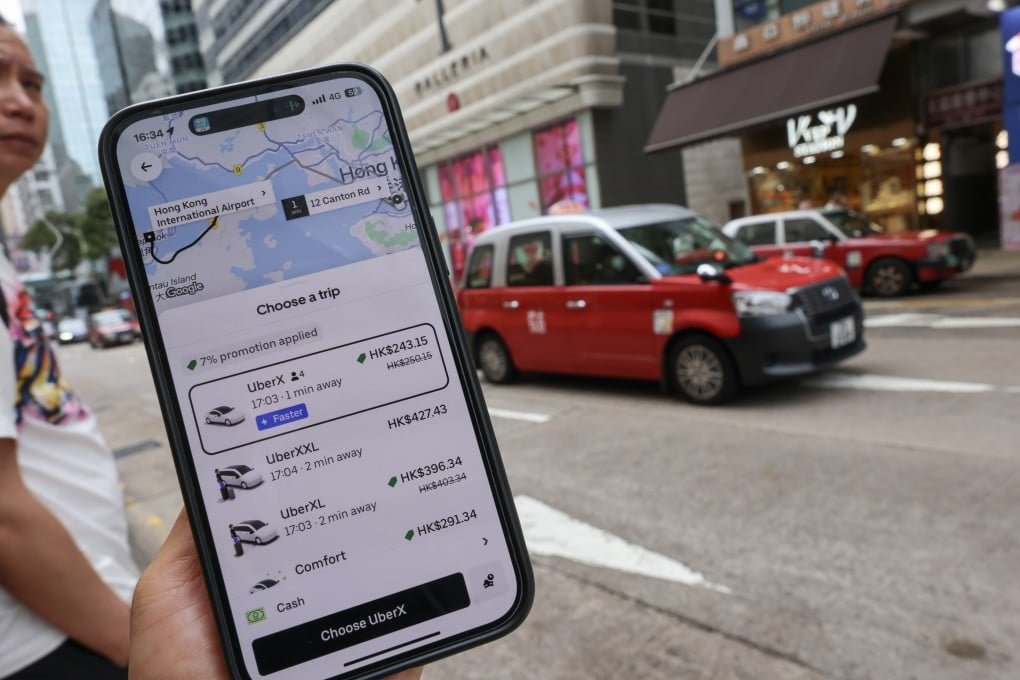
Ride-hailing services gained popularity partly because they offered app-based booking, transparent pricing, route tracking and cashless payment options that many passengers considered more reliable.
Authorities have attempted for years to balance competing interests without fully resolving the legal ambiguity surrounding ride-hailing operations.
While some forms of ride-hailing are technically restricted under existing licensing laws, enforcement has been uneven and the platforms have continued operating at scale.
The current policy discussions could reshape the market permanently.
A quota system would likely establish a fixed number of legal ride-hailing permits or vehicles, potentially limiting future expansion even as consumer demand grows.
Critics argue this would recreate the same scarcity dynamics that already distort the taxi sector.
Economically, quotas function as barriers to entry.
Limiting supply can increase permit values and protect incumbents, but it can also reduce service availability during peak periods and weaken competitive pressure to improve service quality.
In cities with dense urban populations such as Hong Kong, transport flexibility is especially important because demand fluctuates sharply with commuting patterns, tourism and nightlife activity.
Supporters of tighter controls argue that unrestricted ride-hailing growth can worsen congestion, strain road infrastructure and destabilize regulated taxi industries.
Similar arguments have emerged globally as governments struggle to integrate platform-based transport into older regulatory systems designed long before smartphone applications existed.
The Hong Kong debate is also tied to broader questions about economic openness and technological adaptation.
The city has long marketed itself as an international business center built on market efficiency and modern infrastructure.
Critics of rigid quotas argue that overly restrictive transport regulation would signal institutional resistance to competition and digital innovation at a time when regional rivals are modernizing aggressively.
The political sensitivity is amplified by the financial exposure of taxi license holders.
Taxi licenses in Hong Kong once reached extremely high market prices, with many owners financing purchases based on assumptions of long-term scarcity and protected market share.
The rise of ride-hailing platforms contributed to significant declines in license valuations, increasing pressure on authorities to avoid abrupt regulatory shifts.
Consumers, however, have increasingly adapted to app-based mobility expectations seen across major global cities.
Many passengers now expect real-time booking, upfront fare estimates, driver ratings and integrated digital payments as standard transport features rather than premium services.
The policy outcome will likely influence investment decisions across Hong Kong’s wider technology and mobility sectors.
A restrictive licensing framework could discourage platform expansion and reduce incentives for innovation in electric vehicles, dynamic routing and integrated transport applications.
A more open framework could intensify competition and accelerate digital transformation but would further pressure incumbent taxi operators.
What is emerging is not simply a dispute over transport apps.
It is a broader test of how Hong Kong manages economic transition when new digital platforms collide with entrenched asset structures and politically influential legacy industries.
The practical consequence of rigid quotas would be a transport market shaped less by consumer demand and technological efficiency than by administrative limits designed to manage disruption, preserving incumbent protections while slowing the competitive evolution of urban mobility.
The issue centers on how Hong Kong should regulate app-based ride-hailing operators such as Uber and locally active transport platforms in a market historically dominated by the city’s tightly controlled taxi licensing regime.
What is confirmed is that authorities are studying new legal frameworks that could include caps on the number of ride-hailing vehicles permitted to operate legally.
The debate reflects a structural collision between two systems.
Hong Kong’s traditional taxi market is built around fixed license scarcity.
Taxi licenses have historically traded at extremely high values because the government strictly limited supply for decades.
Ride-hailing platforms disrupted that structure by connecting passengers directly with drivers through digital applications, bypassing many of the economic assumptions underpinning the legacy licensing model.
The key issue is whether regulation is being designed primarily to modernize urban transport or to preserve the financial value of existing taxi licenses.
Taxi owners and industry groups argue that unrestricted ride-hailing competition would undermine livelihoods and destroy asset values tied to licenses that operators purchased under a regulated system.
Ride-hailing advocates counter that protecting artificial scarcity comes at the expense of service quality, pricing efficiency and consumer convenience.
Hong Kong’s taxi sector has faced mounting criticism in recent years over service standards, refusal of rides, aging vehicles and resistance to digital payment systems.
Ride-hailing services gained popularity partly because they offered app-based booking, transparent pricing, route tracking and cashless payment options that many passengers considered more reliable.
Authorities have attempted for years to balance competing interests without fully resolving the legal ambiguity surrounding ride-hailing operations.
While some forms of ride-hailing are technically restricted under existing licensing laws, enforcement has been uneven and the platforms have continued operating at scale.
The current policy discussions could reshape the market permanently.
A quota system would likely establish a fixed number of legal ride-hailing permits or vehicles, potentially limiting future expansion even as consumer demand grows.
Critics argue this would recreate the same scarcity dynamics that already distort the taxi sector.
Economically, quotas function as barriers to entry.
Limiting supply can increase permit values and protect incumbents, but it can also reduce service availability during peak periods and weaken competitive pressure to improve service quality.
In cities with dense urban populations such as Hong Kong, transport flexibility is especially important because demand fluctuates sharply with commuting patterns, tourism and nightlife activity.
Supporters of tighter controls argue that unrestricted ride-hailing growth can worsen congestion, strain road infrastructure and destabilize regulated taxi industries.
Similar arguments have emerged globally as governments struggle to integrate platform-based transport into older regulatory systems designed long before smartphone applications existed.
The Hong Kong debate is also tied to broader questions about economic openness and technological adaptation.
The city has long marketed itself as an international business center built on market efficiency and modern infrastructure.
Critics of rigid quotas argue that overly restrictive transport regulation would signal institutional resistance to competition and digital innovation at a time when regional rivals are modernizing aggressively.
The political sensitivity is amplified by the financial exposure of taxi license holders.
Taxi licenses in Hong Kong once reached extremely high market prices, with many owners financing purchases based on assumptions of long-term scarcity and protected market share.
The rise of ride-hailing platforms contributed to significant declines in license valuations, increasing pressure on authorities to avoid abrupt regulatory shifts.
Consumers, however, have increasingly adapted to app-based mobility expectations seen across major global cities.
Many passengers now expect real-time booking, upfront fare estimates, driver ratings and integrated digital payments as standard transport features rather than premium services.
The policy outcome will likely influence investment decisions across Hong Kong’s wider technology and mobility sectors.
A restrictive licensing framework could discourage platform expansion and reduce incentives for innovation in electric vehicles, dynamic routing and integrated transport applications.
A more open framework could intensify competition and accelerate digital transformation but would further pressure incumbent taxi operators.
What is emerging is not simply a dispute over transport apps.
It is a broader test of how Hong Kong manages economic transition when new digital platforms collide with entrenched asset structures and politically influential legacy industries.
The practical consequence of rigid quotas would be a transport market shaped less by consumer demand and technological efficiency than by administrative limits designed to manage disruption, preserving incumbent protections while slowing the competitive evolution of urban mobility.
AI Disclaimer: An advanced artificial intelligence (AI) system generated the content of this page on its own. This innovative technology conducts extensive research from a variety of reliable sources, performs rigorous fact-checking and verification, cleans up and balances biased or manipulated content, and presents a minimal factual summary that is just enough yet essential for you to function as an informed and educated citizen. Please keep in mind, however, that this system is an evolving technology, and as a result, the article may contain accidental inaccuracies or errors. We urge you to help us improve our site by reporting any inaccuracies you find using the "Contact Us" link at the bottom of this page. Your helpful feedback helps us improve our system and deliver more precise content. When you find an article of interest here, please look for the full and extensive coverage of this topic in traditional news sources, as they are written by professional journalists that we try to support, not replace. We appreciate your understanding and assistance.