Trump’s China Policy Split Exposed as “Dove” Faction Pushes Deal-Making Ahead of Beijing Summit
Internal White House tensions over business engagement and tariff strategy highlight a broader shift toward transactional diplomacy as Trump prepares for high-stakes talks with Xi Jinping
A growing internal debate inside the U.S. administration over how aggressively to engage China is shaping President Donald Trump’s upcoming trip to Beijing, with advisers split between economic deal-making and strategic restraint.
The emerging dynamic centers on whether Washington should prioritize large-scale commercial agreements or maintain tighter restrictions on trade and technology flows as leverage in negotiations with China’s leadership.
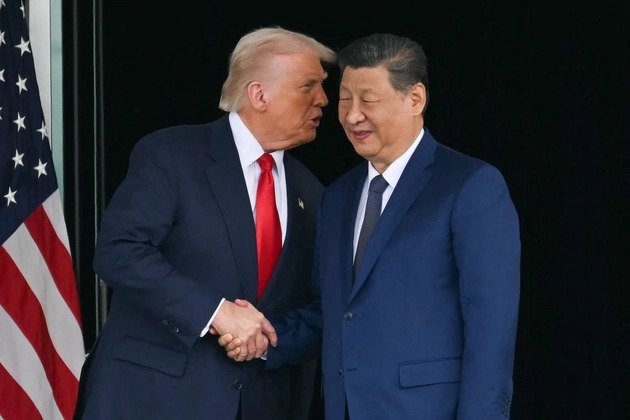
What is confirmed is that Trump is preparing for a high-level summit with Chinese President Xi Jinping in Beijing, expected to focus on trade, technology restrictions, rare earth minerals, agricultural purchases, and broader geopolitical disputes.
The meeting is widely framed as a test of Trump’s preference for transactional diplomacy, where economic concessions are traded for political or strategic gains.
The internal divide within the administration has been sharpened by disagreements over the role of American business leaders in the visit.
Some officials have pushed for a larger corporate delegation to accompany the president, arguing that visible commercial deals would demonstrate economic success and strengthen leverage in negotiations.
Others have warned that expanding business involvement could blur national security lines and weaken the administration’s negotiating posture.
The result has been uncertainty for executives invited to participate, with decisions on attendance reportedly shifting until shortly before departure.
At the center of this approach is a faction of advisers and officials who favor engagement with China through structured economic deals rather than broad punitive measures.
This group has been described in internal discussions as more open to negotiated trade-offs, reflecting a broader shift in U.S. policy away from strict decoupling and toward managed competition.
The approach aligns with Trump’s own long-standing preference for high-visibility agreements that can be presented as concrete wins.
The broader context is a trade relationship defined by competing priorities.
The United States is seeking increased Chinese purchases of American agricultural goods, energy exports, and manufactured products such as aircraft.
It is also pressing Beijing to ease restrictions on critical minerals and rare earth exports, which are essential to U.S. defense and technology supply chains.
China, meanwhile, is expected to push for reduced U.S. export controls on advanced semiconductors and a softer stance on investment restrictions affecting Chinese firms.
Analysts describe the talks as less about structural resolution and more about stabilizing a fragile equilibrium.
Both sides have used tariffs, export controls, and regulatory measures as bargaining tools while avoiding a full breakdown in economic ties.
This has created a pattern of temporary truces and narrowly defined agreements that can be presented domestically as progress without fundamentally resolving underlying tensions.
The political stakes are significant on both sides.
For Trump, the summit offers an opportunity to showcase major trade agreements ahead of domestic political milestones, reinforcing his image as a dealmaker capable of extracting concessions from a strategic rival.
For Beijing, the talks provide a chance to secure incremental relief on technology restrictions and maintain access to critical export markets while managing economic pressure at home.
The outcome of the Beijing meeting is expected to be measured less by sweeping breakthroughs and more by whether both sides can secure limited, symbolic concessions that preserve space for continued negotiation.
The direction of U.S. policy toward China will likely be shaped not only by the summit itself but also by the internal balance between advisers who favor deeper economic engagement and those who prioritize containment through strategic competition.
The emerging dynamic centers on whether Washington should prioritize large-scale commercial agreements or maintain tighter restrictions on trade and technology flows as leverage in negotiations with China’s leadership.
What is confirmed is that Trump is preparing for a high-level summit with Chinese President Xi Jinping in Beijing, expected to focus on trade, technology restrictions, rare earth minerals, agricultural purchases, and broader geopolitical disputes.
The meeting is widely framed as a test of Trump’s preference for transactional diplomacy, where economic concessions are traded for political or strategic gains.
The internal divide within the administration has been sharpened by disagreements over the role of American business leaders in the visit.
Some officials have pushed for a larger corporate delegation to accompany the president, arguing that visible commercial deals would demonstrate economic success and strengthen leverage in negotiations.
Others have warned that expanding business involvement could blur national security lines and weaken the administration’s negotiating posture.
The result has been uncertainty for executives invited to participate, with decisions on attendance reportedly shifting until shortly before departure.
At the center of this approach is a faction of advisers and officials who favor engagement with China through structured economic deals rather than broad punitive measures.
This group has been described in internal discussions as more open to negotiated trade-offs, reflecting a broader shift in U.S. policy away from strict decoupling and toward managed competition.
The approach aligns with Trump’s own long-standing preference for high-visibility agreements that can be presented as concrete wins.
The broader context is a trade relationship defined by competing priorities.
The United States is seeking increased Chinese purchases of American agricultural goods, energy exports, and manufactured products such as aircraft.
It is also pressing Beijing to ease restrictions on critical minerals and rare earth exports, which are essential to U.S. defense and technology supply chains.
China, meanwhile, is expected to push for reduced U.S. export controls on advanced semiconductors and a softer stance on investment restrictions affecting Chinese firms.
Analysts describe the talks as less about structural resolution and more about stabilizing a fragile equilibrium.
Both sides have used tariffs, export controls, and regulatory measures as bargaining tools while avoiding a full breakdown in economic ties.
This has created a pattern of temporary truces and narrowly defined agreements that can be presented domestically as progress without fundamentally resolving underlying tensions.
The political stakes are significant on both sides.
For Trump, the summit offers an opportunity to showcase major trade agreements ahead of domestic political milestones, reinforcing his image as a dealmaker capable of extracting concessions from a strategic rival.
For Beijing, the talks provide a chance to secure incremental relief on technology restrictions and maintain access to critical export markets while managing economic pressure at home.
The outcome of the Beijing meeting is expected to be measured less by sweeping breakthroughs and more by whether both sides can secure limited, symbolic concessions that preserve space for continued negotiation.
The direction of U.S. policy toward China will likely be shaped not only by the summit itself but also by the internal balance between advisers who favor deeper economic engagement and those who prioritize containment through strategic competition.
AI Disclaimer: An advanced artificial intelligence (AI) system generated the content of this page on its own. This innovative technology conducts extensive research from a variety of reliable sources, performs rigorous fact-checking and verification, cleans up and balances biased or manipulated content, and presents a minimal factual summary that is just enough yet essential for you to function as an informed and educated citizen. Please keep in mind, however, that this system is an evolving technology, and as a result, the article may contain accidental inaccuracies or errors. We urge you to help us improve our site by reporting any inaccuracies you find using the "Contact Us" link at the bottom of this page. Your helpful feedback helps us improve our system and deliver more precise content. When you find an article of interest here, please look for the full and extensive coverage of this topic in traditional news sources, as they are written by professional journalists that we try to support, not replace. We appreciate your understanding and assistance.