Hong Kong Heat Risks Are Becoming a Public Health Crisis for the Poor, Elderly and Housing-Insecure
Community organizations are urging the Hong Kong government to expand heat protections as extreme temperatures increasingly threaten low-income residents, outdoor workers, and people living in cramped housing conditions.
Hong Kong’s growing heat-risk problem is fundamentally system-driven because the danger is being intensified by urban density, housing inequality, climate change, aging demographics, and gaps in public protection systems rather than by a single weather event.
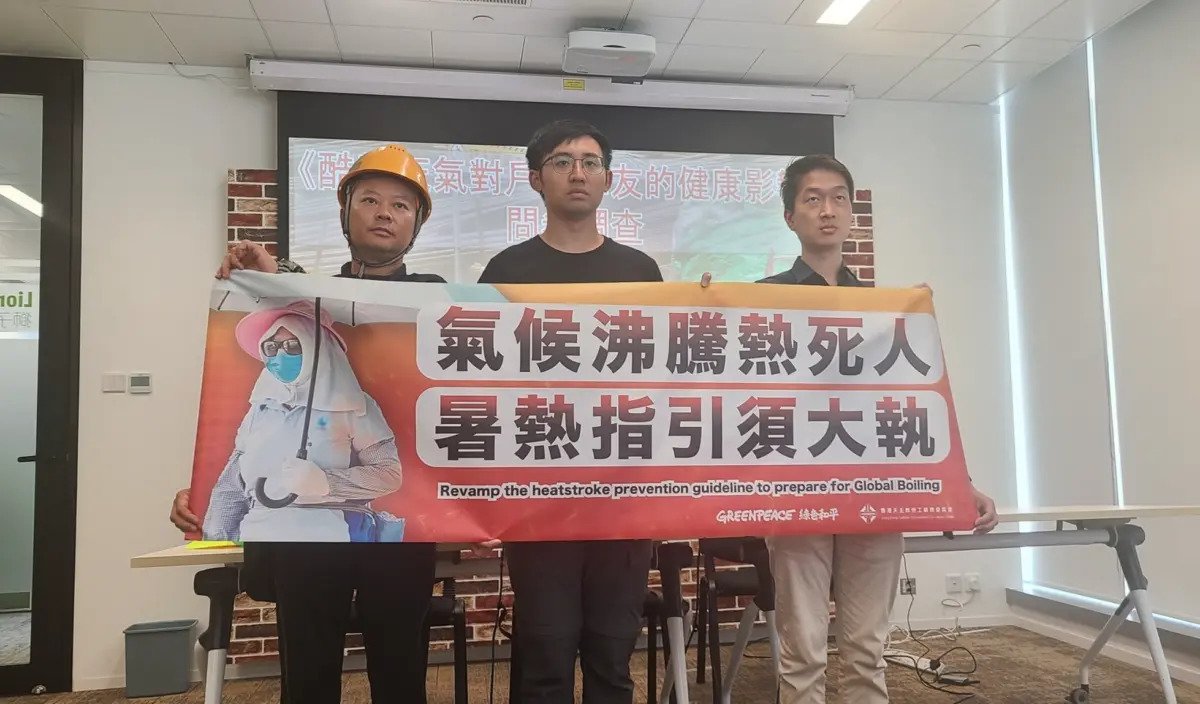
Non-governmental organizations and community groups in Hong Kong are calling for stronger government intervention to protect vulnerable populations from rising heat hazards as extreme temperatures become more frequent, longer-lasting, and more dangerous across the city.
What is confirmed is that advocacy groups have increased pressure on authorities to improve heat-response policies, expand public cooling access, strengthen labour protections, and provide greater support for elderly residents, low-income households, outdoor workers, and people living in subdivided apartments.
The issue has become increasingly urgent because Hong Kong’s climate is warming while much of the city’s built environment traps and amplifies heat.
Dense high-rise development, limited airflow in crowded districts, concrete-heavy urban infrastructure, and extensive paved surfaces contribute to a strong urban heat-island effect.
Temperatures in heavily built-up neighborhoods can remain significantly higher than surrounding areas, particularly overnight.
This creates dangerous conditions for vulnerable populations.
Older residents are especially exposed because Hong Kong has one of the fastest-aging populations in Asia.
Many elderly individuals live alone, have chronic health conditions, or lack access to affordable cooling.
Low-income households face additional pressure because electricity costs can discourage air-conditioner use during prolonged heat periods.
Housing conditions are central to the problem.
Hong Kong’s severe housing shortage and extreme property prices pushed many low-income residents into subdivided flats, tiny partitioned rooms, rooftop structures, or poorly ventilated living spaces.
These units can become dangerously hot during summer months.
Poor insulation, limited airflow, cramped layouts, and weak ventilation systems make indoor temperatures difficult to manage even when outdoor heat warnings are active.
Community organizations argue that heat exposure should increasingly be treated as a public-health and social-equity issue rather than simply a weather inconvenience.
Medical risks include dehydration, heat exhaustion, cardiovascular stress, respiratory complications, kidney strain, and heatstroke.
The threat becomes especially serious during prolonged periods of high humidity, which reduce the body’s ability to cool itself effectively.
Outdoor workers face another major area of concern.
Construction workers, cleaners, delivery drivers, transportation staff, street vendors, and logistics employees often remain exposed to extreme temperatures for long periods.
Labour groups and activists have repeatedly called for stronger mandatory heat-safety rules involving rest periods, hydration access, shaded recovery areas, and clearer suspension thresholds for dangerous conditions.
Hong Kong authorities already issue heat warnings through the observatory system, but critics argue the existing framework remains fragmented and overly dependent on individual employer discretion.
Climate change is magnifying the challenge.
Hong Kong has experienced rising average temperatures, more frequent extreme heat days, and increasingly intense humidity patterns over recent decades.
Climate models project further warming across southern China and the Pearl River Delta region.
The city is particularly vulnerable because of its combination of subtropical climate, dense urban development, aging population, and socioeconomic inequality.
The economic consequences are also becoming more significant.
Heat stress affects labour productivity, healthcare demand, energy consumption, infrastructure strain, and public transport systems.
Businesses increasingly face pressure to adapt working conditions and building standards to hotter environments.
Electricity demand surges during heatwaves as cooling use rises sharply.
That creates additional stress on energy systems and increases financial burdens for lower-income households already struggling with Hong Kong’s high cost of living.
NGOs are advocating several policy measures.
These include expanded access to public cooling centers, subsidized electricity support for vulnerable households, stronger occupational heat protections, better public education campaigns, urban greening projects, and improvements to housing standards for low-income residents.
Some groups are also calling for more comprehensive heat-risk mapping to identify neighborhoods and populations facing the greatest exposure.
The issue intersects directly with Hong Kong’s wider housing and inequality problems.
The city remains one of the world’s most expensive property markets, with sharp divides between affluent districts and densely packed lower-income communities.
Environmental risks therefore do not affect all residents equally.
Wealthier households typically possess stronger cooling systems, larger living spaces, better insulation, and greater mobility during extreme weather events.
Lower-income residents often face the opposite conditions.
The government has increasingly acknowledged climate adaptation as an important policy issue, including flood management, energy transition, and urban resilience planning.
But critics argue heat adaptation has not received the same level of political urgency as financial stability, housing supply, or broader infrastructure development.
The broader regional context matters as well.
Cities across Asia are confronting similar pressures as climate change combines with rapid urbanization and aging populations.
Heat-related mortality and illness are becoming increasingly significant public-health concerns from South Asia to East Asia.
Hong Kong’s situation is especially visible because of the city’s extreme density and housing constraints.
The current debate therefore reflects a deeper shift in how climate risk is understood.
Extreme heat is no longer viewed simply as a seasonal discomfort.
It is increasingly treated as a structural urban governance issue tied directly to inequality, labour protection, public health, housing quality, and long-term climate resilience.
The practical consequence is that pressure is growing on Hong Kong authorities to move beyond warning systems and toward more interventionist heat-protection policies capable of shielding vulnerable residents from a climate environment that is becoming progressively harsher and more physically dangerous.
Non-governmental organizations and community groups in Hong Kong are calling for stronger government intervention to protect vulnerable populations from rising heat hazards as extreme temperatures become more frequent, longer-lasting, and more dangerous across the city.
What is confirmed is that advocacy groups have increased pressure on authorities to improve heat-response policies, expand public cooling access, strengthen labour protections, and provide greater support for elderly residents, low-income households, outdoor workers, and people living in subdivided apartments.
The issue has become increasingly urgent because Hong Kong’s climate is warming while much of the city’s built environment traps and amplifies heat.
Dense high-rise development, limited airflow in crowded districts, concrete-heavy urban infrastructure, and extensive paved surfaces contribute to a strong urban heat-island effect.
Temperatures in heavily built-up neighborhoods can remain significantly higher than surrounding areas, particularly overnight.
This creates dangerous conditions for vulnerable populations.
Older residents are especially exposed because Hong Kong has one of the fastest-aging populations in Asia.
Many elderly individuals live alone, have chronic health conditions, or lack access to affordable cooling.
Low-income households face additional pressure because electricity costs can discourage air-conditioner use during prolonged heat periods.
Housing conditions are central to the problem.
Hong Kong’s severe housing shortage and extreme property prices pushed many low-income residents into subdivided flats, tiny partitioned rooms, rooftop structures, or poorly ventilated living spaces.
These units can become dangerously hot during summer months.
Poor insulation, limited airflow, cramped layouts, and weak ventilation systems make indoor temperatures difficult to manage even when outdoor heat warnings are active.
Community organizations argue that heat exposure should increasingly be treated as a public-health and social-equity issue rather than simply a weather inconvenience.
Medical risks include dehydration, heat exhaustion, cardiovascular stress, respiratory complications, kidney strain, and heatstroke.
The threat becomes especially serious during prolonged periods of high humidity, which reduce the body’s ability to cool itself effectively.
Outdoor workers face another major area of concern.
Construction workers, cleaners, delivery drivers, transportation staff, street vendors, and logistics employees often remain exposed to extreme temperatures for long periods.
Labour groups and activists have repeatedly called for stronger mandatory heat-safety rules involving rest periods, hydration access, shaded recovery areas, and clearer suspension thresholds for dangerous conditions.
Hong Kong authorities already issue heat warnings through the observatory system, but critics argue the existing framework remains fragmented and overly dependent on individual employer discretion.
Climate change is magnifying the challenge.
Hong Kong has experienced rising average temperatures, more frequent extreme heat days, and increasingly intense humidity patterns over recent decades.
Climate models project further warming across southern China and the Pearl River Delta region.
The city is particularly vulnerable because of its combination of subtropical climate, dense urban development, aging population, and socioeconomic inequality.
The economic consequences are also becoming more significant.
Heat stress affects labour productivity, healthcare demand, energy consumption, infrastructure strain, and public transport systems.
Businesses increasingly face pressure to adapt working conditions and building standards to hotter environments.
Electricity demand surges during heatwaves as cooling use rises sharply.
That creates additional stress on energy systems and increases financial burdens for lower-income households already struggling with Hong Kong’s high cost of living.
NGOs are advocating several policy measures.
These include expanded access to public cooling centers, subsidized electricity support for vulnerable households, stronger occupational heat protections, better public education campaigns, urban greening projects, and improvements to housing standards for low-income residents.
Some groups are also calling for more comprehensive heat-risk mapping to identify neighborhoods and populations facing the greatest exposure.
The issue intersects directly with Hong Kong’s wider housing and inequality problems.
The city remains one of the world’s most expensive property markets, with sharp divides between affluent districts and densely packed lower-income communities.
Environmental risks therefore do not affect all residents equally.
Wealthier households typically possess stronger cooling systems, larger living spaces, better insulation, and greater mobility during extreme weather events.
Lower-income residents often face the opposite conditions.
The government has increasingly acknowledged climate adaptation as an important policy issue, including flood management, energy transition, and urban resilience planning.
But critics argue heat adaptation has not received the same level of political urgency as financial stability, housing supply, or broader infrastructure development.
The broader regional context matters as well.
Cities across Asia are confronting similar pressures as climate change combines with rapid urbanization and aging populations.
Heat-related mortality and illness are becoming increasingly significant public-health concerns from South Asia to East Asia.
Hong Kong’s situation is especially visible because of the city’s extreme density and housing constraints.
The current debate therefore reflects a deeper shift in how climate risk is understood.
Extreme heat is no longer viewed simply as a seasonal discomfort.
It is increasingly treated as a structural urban governance issue tied directly to inequality, labour protection, public health, housing quality, and long-term climate resilience.
The practical consequence is that pressure is growing on Hong Kong authorities to move beyond warning systems and toward more interventionist heat-protection policies capable of shielding vulnerable residents from a climate environment that is becoming progressively harsher and more physically dangerous.
AI Disclaimer: An advanced artificial intelligence (AI) system generated the content of this page on its own. This innovative technology conducts extensive research from a variety of reliable sources, performs rigorous fact-checking and verification, cleans up and balances biased or manipulated content, and presents a minimal factual summary that is just enough yet essential for you to function as an informed and educated citizen. Please keep in mind, however, that this system is an evolving technology, and as a result, the article may contain accidental inaccuracies or errors. We urge you to help us improve our site by reporting any inaccuracies you find using the "Contact Us" link at the bottom of this page. Your helpful feedback helps us improve our system and deliver more precise content. When you find an article of interest here, please look for the full and extensive coverage of this topic in traditional news sources, as they are written by professional journalists that we try to support, not replace. We appreciate your understanding and assistance.